
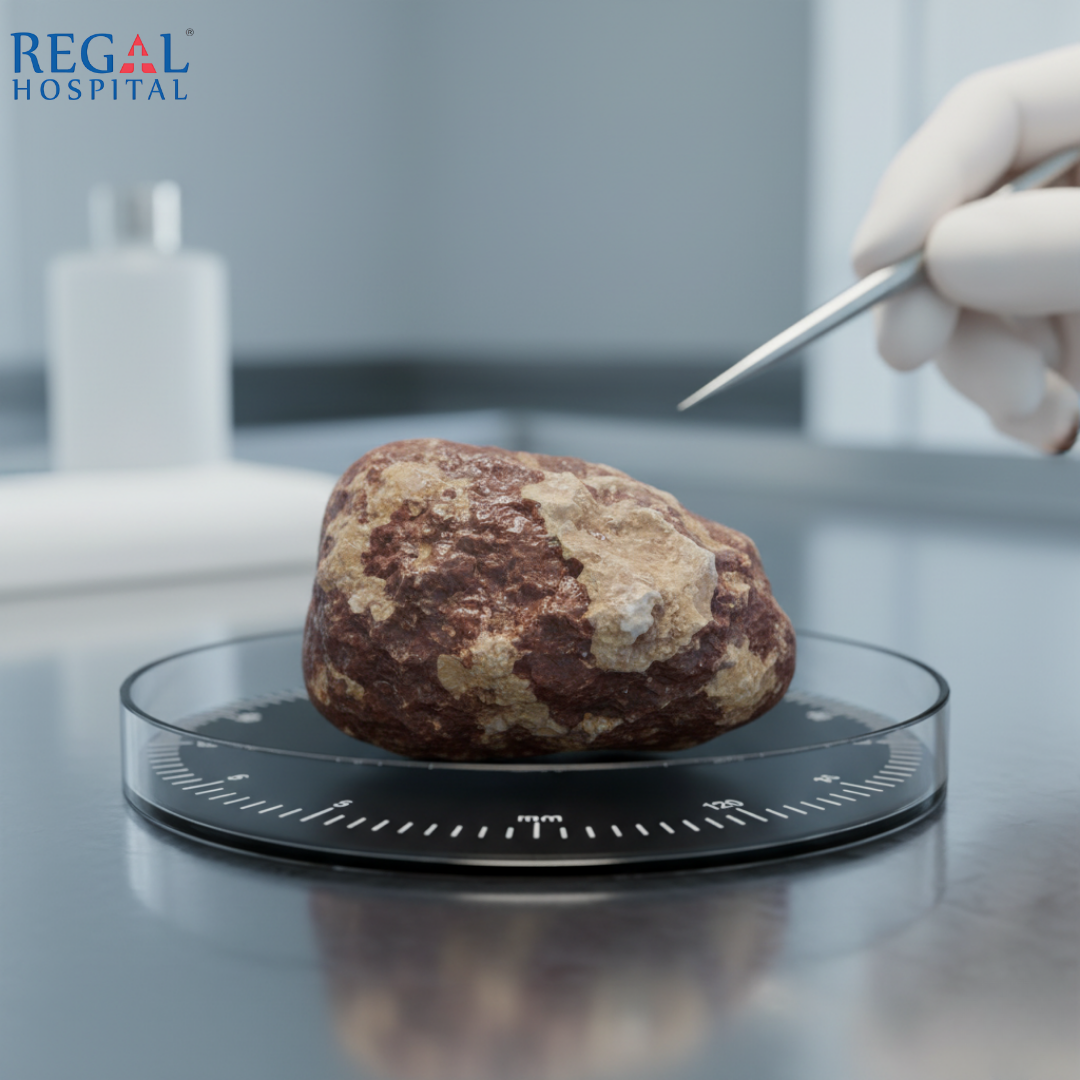
What More Precisely is a Kidney Stone?
These are hard, small stones that form in the kidney. Crystals build in the kidney when urine is concentrated in minerals. Depending on the type of stone, they can be as small as a little grain of sand, or as big as a golf ball. Problems occur when stones start to move.
Recognizing the Problems in a Diagnosing a Stone
A kidney stone can go unnoticed until it starts traveling through the urine and urinary tract. Then, suddenly the symptoms are pronounced and very hard to ignore.
Abstract Text: A kidney stone brings about excruciating, cramping pains, along the back side as well as the lower abdomen, and the pain transcends the groin.
Changes in Your Urine: You may see blood (pink, red, or brown urine), notice it is cloudy, or see an unusual Odor.
Painful Urination: You may feel a burning sensation during urination.
Constant Urge to Go: You may feel a frequent need to urinate.
Nausea and Vomiting: Pain often leads to a stomach upset.
If these symptoms apply to you, it may be a good idea to consult a doctor.
How do Doctors Diagnose the Problem?
Getting a proper diagnosis is the first step to getting relief. Your doctor typically:
Listens to Your Story: They ask about your symptoms, your medical history, and if you have any family history of kidney stones.
Runs a Urine Test: A simple urine test can reveal the presence of blood, stones or crystals, and infections.
Uses Imaging Tests: Your doctor may order an X-ray, Ultrasound, or a CT scan to visualize the stones. These tests help determine the size and location of the stone.
Your Path to Relief: Treatment Options
Relief for patients depends on the size of the stone and the degree to which it is impacting the symptoms. Treatment is not interchangeable.
The Smaller Stones: For small stones, the practice may be even less invasive. Your physician may give you pain medication and encourage you to drink enough water to let the stone pass on its own.
The Larger Stones: For larger stones that cannot be passed, your physician, again, has numerous alternative solutions.
Shock Wave Lithotripsy (ESWL): This procedure is non-invasive and uses sound waves to break the stone into tiny, passable fragments from outside the body and may be recommended as the first line treatment.
Ureteroscopy: This involves the use of a thin scope that may be passed into the ureter, identifying the stone and removing it, or the stone may be broken with a laser.
Percutaneous Nephrolithotomy (PCNL): For the very large stones, this surgery is minimally invasive and consists of removing the stone through a small incision on your back.
Activating Your Commands for Preventing Future Stones
After the first one, here is the list of things to prevent the recurrence.
Make Water Your Best Friend: Optimal intake is the most important thing you can do. Your goal is to produce at least 2.5 liters of urine a day.
Adjust Your Diet:
Reduce the Salt: High-sodium diets can encourage stone formation.
Limit animal protein: Cutting down on meat and fish can help lower uric acid levels.
Be sensible about oxalates: Foods such as spinach, chocolate, and nuts contain oxalates. You don’t have to avoid these foods; just eat them in moderation.
Consult your physician: If you have stones that keep coming back, your physician may prescribe medication to help prevent them.
Do Not Suffer in Silence
If you have a kidney stone, you may experience painful and disruptive symptoms. Fortunately, effective treatments and prevention strategies are available. If you suspect you have a kidney stone, don’t wait until your symptoms become worse. Contact a healthcare provider to begin reclaiming your pain-free life.
Book your appointment today to meet with one of our urologists.
➡️ To visit our website: https://regalhospital.com/ to schedule your appointment.
➡️ WhatsApp: https://wa.me/+918884048888


