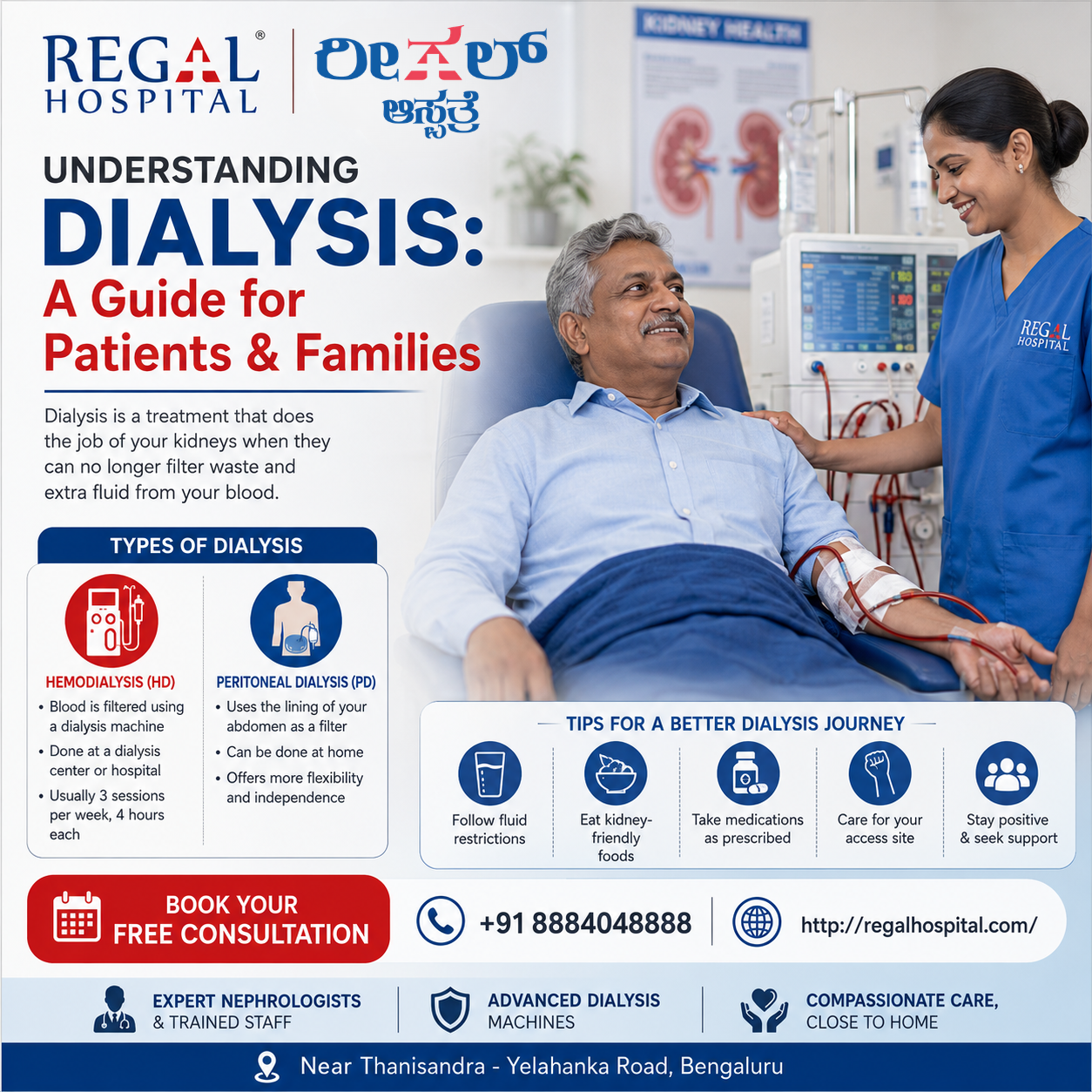
First, hearing your doctor say you need dialysis brings sudden worry. Specifically, it is completely natural to feel anxiety, confusion, and fear. For instance, you might wonder if it will hurt. Also, you might worry about how it will change your daily routine. If you are dealing with these thoughts right now, take a deep breath.
Truly, you are not alone on this journey. Furthermore, dialysis is not an ending. Instead, it is a new beginning that helps you regain your energy. In fact, millions of people undergo dialysis safely. Consequently, they continue to work, travel, and spend quality time with loved ones.
Here at Regal Hospital, we understand your fears. Because stepping into a dialysis unit for the first time is intimidating, we are here to help. Ultimately, we believe that knowledge is the best remedy for fear. Below is a warm, easy guide to help you navigate this new chapter confidently.
What is Dialysis and Why is it Needed?
First, to understand dialysis, you must understand healthy kidneys. Basically, your kidneys are like the body’s natural water filters. Every day, they work quietly to remove waste and extra water. Then, they turn these toxins into urine. Also, they control your blood pressure and keep minerals perfectly balanced.
However, advanced Chronic Kidney Disease (CKD) causes these filters to stop working. As a result, harmful waste and excess fluids build up in your body. Consequently, this makes you feel extremely tired, nauseous, or breathless.
Therefore, dialysis steps in to save your health. Simply put, it is a medical treatment that does the exact job of your kidneys. By doing this, it removes extra fluid and waste from your blood. Ultimately, it helps you feel much better and keeps your body running smoothly.
Types of Dialysis: Finding the Right Fit
Currently, there are two main types of dialysis. Depending on your exact medical condition, your kidney specialist will help you choose the best option.
1. Hemodialysis (HD)
First, this is the most common type of dialysis. During hemodialysis, an artificial kidney machine cleans your blood safely.
-
How it works: First, a small amount of blood is drawn through a tube. Next, it passes through the machine’s filter to be cleaned. Finally, the clean blood returns to your body safely.
-
The routine: Usually, this happens at a hospital or specialized dialysis center. Specifically, a typical session takes about four hours. Also, it is usually done three times a week.
-
Preparation: Before starting, a surgeon creates an AV fistula in your arm. Basically, this joins a vein and artery together to make blood flow much easier.
2. Peritoneal Dialysis (PD)
Alternatively, this method does not use a machine outside the body. Instead, it uses the natural lining of your own belly as a filter.
-
How it works: First, cleansing fluid enters your belly through a soft tube. Over a few hours, the fluid absorbs waste and extra water. Afterward, the used fluid is completely drained out and replaced.
-
The routine: Surprisingly, the biggest advantage is doing this comfortably at home. In fact, many patients do it overnight while they sleep.
What to Expect During Your First Session
Undoubtedly, the fear of the first session is worse than the session itself. If you are having hemodialysis at our center, here is what your day looks like.
When you arrive, our friendly nursing staff will check your weight and blood pressure. Next, you will sit in a comfortable, reclining chair. Then, the nurse will clean your arm and insert two needles. While nobody likes needles, the pinch only lasts a brief second. Once the machine is running, the procedure is completely painless.
During the four-hour session, you are free to relax. For example, many patients sleep, read, or watch movies on their phones. Afterward, the needles are removed, and you are ready to go home. Although you might feel tired at first, this improves over time.
Practical Tips for Patients and Families
Ultimately, managing life on dialysis requires total teamwork. Therefore, here are some practical tips to make the journey smoother:
-
Watch Fluid Intake: Because your kidneys cannot remove extra water, drinking too much causes swelling. Therefore, strictly follow your doctor’s advice on daily liquids.
-
Eat a Kidney-Friendly Diet: Next, what you eat directly affects how you feel. Specifically, you must eat home-cooked meals low in salt and potassium.
-
Care for Your Access Site: Also, if you have an AV fistula, protect it fiercely. For instance, never wear tight clothing or watches on that arm.
-
Support for Caregivers: Finally, caregiving is an act of deep love. However, it can be deeply exhausting. Therefore, caregivers must not forget to care for their own mental health.
How Regal Hospital Can Help You
In conclusion, navigating kidney care requires a hospital with genuine compassion. Conveniently located near Thanisandra-Yelahanka Road in Bengaluru, Regal Hospital is your trusted destination for advanced kidney care.
Specifically, our modern dialysis unit is designed entirely for your comfort and safety. Furthermore, we maintain the highest standards of infection control. But, what truly sets us apart is our people. Truly, our experienced nephrologists and caring nurses treat you exactly like family.
Therefore, take charge of your kidney health today. Because your kidneys work tirelessly, they deserve the absolute best protection.
 Call us today: +91 888 405 8888
 Visit us: Near Thanisandra-Yelahanka Road, Bengaluru
 Learn more: www.regalhospital.com