First, managing End-Stage Renal Disease (ESRD) is exhausting. If you undergo regular dialysis, you know this difficult routine well. While dialysis is a lifesaving treatment, it dictates your schedule entirely. Also, it heavily restricts your diet and drains your energy.
When your nephrologist mentions a kidney transplant, you feel profound hope. However, a flood of anxious questions usually follows closely. For instance, where do we start? Next, how do we find a donor? Finally, what will life look like after the surgery?
Naturally, feeling overwhelmed is completely normal. Truly, a kidney transplant is a major medical milestone. However, it is a highly successful, life-changing procedure today. Ultimately, it offers a chance for an active, joyful life.
Here at Regal Hospital, we walk this journey with countless families. We know the key to success is clear information. Also, you need a strong support system and expert guidance. Below is a compassionate guide to the kidney transplant process.
What is a Kidney Transplant?
Basically, a kidney transplant is a major surgical procedure. Specifically, a healthy kidney from a donor is placed into your body.
Interestingly, your original, damaged kidneys usually stay right where they are. Unless they cause severe infections, doctors leave them alone. Instead, the new kidney is placed lower in your abdomen. Then, it connects directly to your blood vessels and bladder. Remarkably, you only need one healthy kidney to live normally.
Understanding Donor Options
Undoubtedly, finding the right healthy kidney is the most crucial step. Generally, there are two primary types of kidney donation:
-
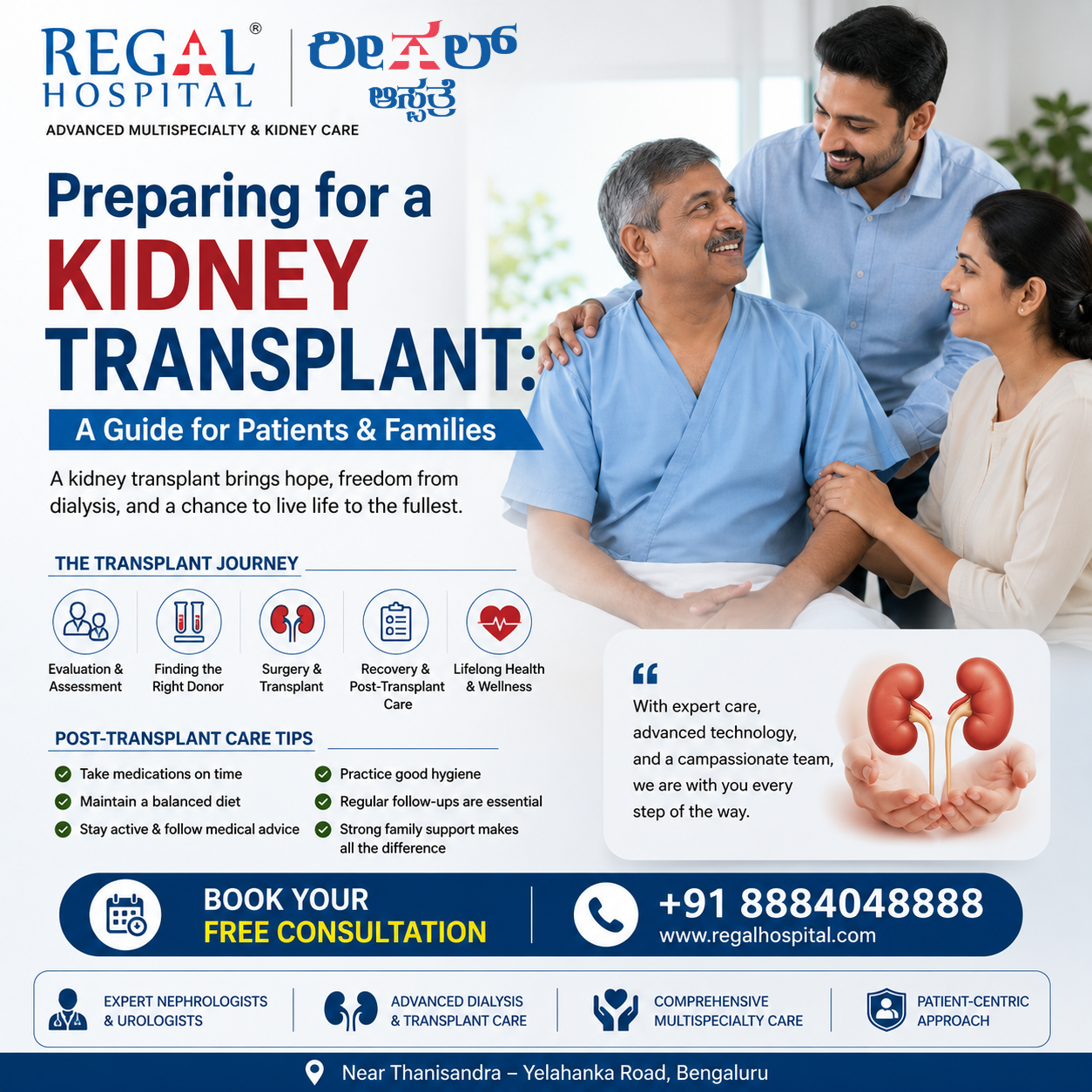
1. Living Donor Transplant: First, a living person can safely donate one kidney. Because humans only need one kidney, this is very safe. Often, this is a close family member or spouse. However, a distant relative or friend can also donate. To do this, their blood and tissue types must match yours. Usually, living donor transplants happen much faster and have better success rates.
-
2. Deceased Donor Transplant: Alternatively, a living donor might not be an option. If so, you join a national waiting list for a deceased donor. While waiting times vary, your medical team keeps you healthy on dialysis.
The Preparation Phase: What to Expect
Before receiving a transplant, your body needs a thorough evaluation. Specifically, we must ensure you are strong enough for surgery.
-
Comprehensive Health Check: First, your transplant team will run many tests. For instance, this includes blood tests and heart evaluations like an ECG.
-
Tissue and Blood Typing: Next, these tests ensure your immune system accepts the new kidney safely.
-
Mental and Emotional Readiness: Finally, a transplant requires a lifelong commitment to daily medications. Therefore, counselors will speak with your family to ensure you are emotionally prepared.
Life After the Transplant: The Road to Recovery
Waking up with a new kidney is an incredible feeling. In fact, many patients report a massive surge of energy quickly. As the new kidney clears toxins, mental clarity returns fast.
However, the surgery is only the very first step. To ensure your body accepts the organ, you must take anti-rejection drugs. Specifically, these immunosuppressants are required for the rest of your life. Because they quiet your immune system, it will not attack the new kidney. Consequently, your immune system will be lowered heavily. Therefore, you must be extra careful about avoiding infections initially.
Practical Tips for Patients and Caregivers
Ultimately, a transplant requires a dedicated team effort at home. Here is how families can ensure a smooth recovery:
-
Become Medication Experts: First, setting alarms and organizing pillboxes is essential. Crucially, anti-rejection medications must be taken at the exact same time every day.
-
Maintain Strict Hygiene: Next, keep your home very clean to protect the patient. Visitors must wash their hands immediately upon entering. Also, anyone with a cold or fever must delay their visit.
-
Focus on a Balanced Diet: Furthermore, your previous dialysis diet restrictions will ease significantly! However, you must still eat fresh, well-cooked meals. Strictly avoid raw foods or unpasteurized milk to prevent infections.
-
Stay Active, but Gentle: Additionally, light walking is highly encouraged to speed up healing. However, avoid lifting heavy weights for at least eight weeks.
-
Care for the Caregiver: Finally, the caregiver’s role is absolutely vital. Therefore, remember to take breaks and ask for help from relatives.
Take Charge of Your Kidney Health Today
In conclusion, your kidneys work tirelessly to keep you healthy. Therefore, they deserve to be fully protected. If you need advanced kidney care, do not leave it to chance. Our compassionate team provides the expert screening and advice you need.
📞 Call us today: +91 888 405 8888
📍 Visit us: Near Thanisandra-Yelahanka Road, Bengaluru
🌐 Learn more: www.regalhospital.com