Introduction:
When selecting a hospital, patients and their families assess various factors in addition to a doctor’s experience and expertise. These include the cleanliness and upkeep of the premises and equipment, and the level of care and concern shown to patients by the hospital staff.
For families in Bangalore looking for hospital safety, understanding prevention of hospital acquired infections and critical care practices is important to make the right choices about their members’ healthcare. These practices are essential for patients undergoing surgery, requiring dialysis, recovering from critical illness, and those in the intensive care unit.
Regal Hospital is a multispecialty and advanced hospital for kidney care located in North Bangalore. It serves the areas of Thanisandra, Hennur, Yelahanka, Hebbal, Tirumanahalli and surrounding areas. Regal Hospital has state-of-the-art facilities including a fully-equipped Intensive Care Unit (ICU) and operation theatres, dialysis and diagnostic services.
Creating and maintaining a safe hospital environment requires vigilance in implementing a series of practices that include infection control, prevention and staff training.
What is included in Hospital Safety?
Hospital safety constitutes a set of practices and systems that help eliminate preventable adverse events in healthcare. Examples include infection control and prevention practices, safe medication and treatment procedures, device maintenance, appropriate patient identification and monitoring, and timely response to changes in the patient’s condition.
A healthcare worker’s diligence in implementing infection control practices is of utmost importance to avoid hospital acquired infections.
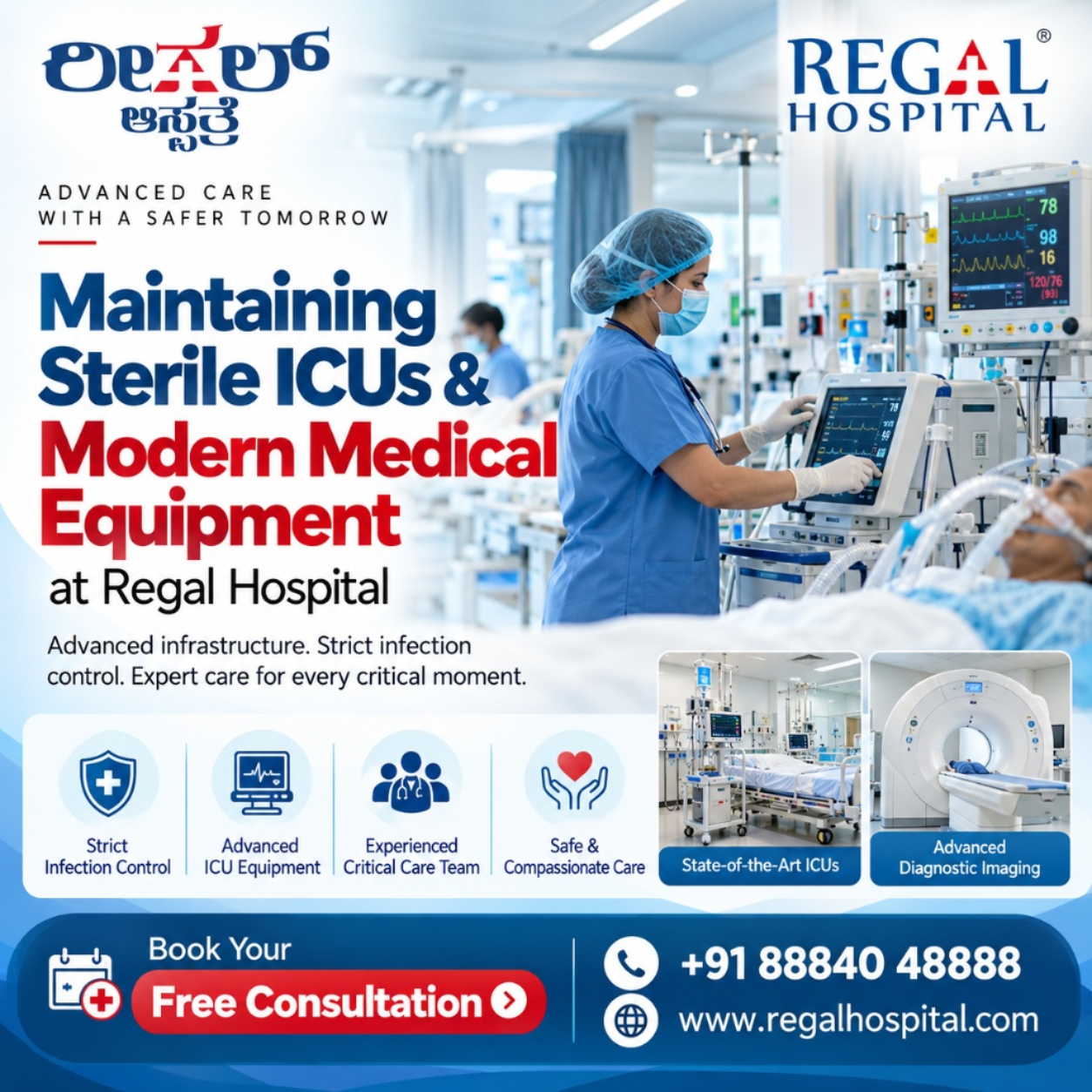
Maintaining a clean ICU is crucial for containing the spread of infection. There are other essential ICU practices, including:
Cleaning and disinfecting high-contact surfaces.
Performing hand hygiene on contact with a patient.
Using appropriate PPE.
Following safe practices for central venous catheters, urinary catheters, and other invasive lines and devices.
Cleaning and reprocessing medical devices and equipment.
Physical separation of patients when clinically required.
There are three major components of safety in a well-functioning critical care unit, namely equipment, environment, and staffing. Any compromises in these could result in serious adverse events.
Family members searching for critical care units online often search using the term ‘sterile ICU,’ especially the unit in Thanisandra. It is important for families to understand that ICU units are not totally sterile like an operation theater; in fact, an ICU depends on controlled hygiene and infection practices.
Healthcare staff evaluates the patient’s response and safety regarding the reduction of breathing support.
Diagnostic Imaging Equipment
Imaging services help clinicians diagnose trauma, infection and other abnormalities. The chosen test is dictated by the suspected condition and the patient’s case.
Regal Hospital provides CT scan, X-ray, Doppler ultrasound and other diagnostic facilities. The investigations are conducted to inform the treatment plan as and when it is required.
Dialysis Equipment
Inadequate renal function leads to the accumulation of waste products and fluid in the body. Dialysis is indicated to remove such waste products and excess fluid.
Comprehensive dialysis care involves various activities including inspection, functional assessment of the dialysis machine, infection control and monitoring the patient during the procedure. It is the responsibility of the nephrologist to determine the interval between the treatment. Patients should strictly adhere to the schedule.
Infection Prevention: Everyday Practices That Matter
Infection prevention is the responsibility of all staff, patients and visitors of the hospital.
Hand Hygiene and Surface Cleaning
Staff should strictly adhere to the hospital’s hand hygiene policy. Visitors are required to clean their hands upon entering and exiting clinical areas and adhere to hand hygiene directives.
Beds and surfaces should be cleaned with appropriate detergents and methods.
Safe Handling of Medical Devices
Infection can occur when these devices are not managed correctly. Their insertion, maintenance and removal should be conducted as per the established clinical protocols.
Reusable equipment must be cleaned, disinfected, or sterilized according to its intended use and the manufacturer’s instructions.
Responsible Antibiotic Use
Antibiotics are essential for treating bacterial infections; however, overuse can lead to antimicrobial resistance.
Doctors base their decisions on the appropriate antibiotic to prescribe based on the suspected infection, relevant test results, and the patient’s condition. Antibiotic leftover should not be kept, and prescribed antibiotic treatment should not be stopped, unless directed by a doctor.
Why Equipment Maintenance and Quality Standards Matter
There are many risks associated with failing medical equipment. For example, inaccurate medical equipment can cause the wrong clinical information to be documented, and malfunctioning medical devices can lead to a delay in providing appropriate patient support.
Routine maintenance includes performing preventive servicing and timely reporting of equipment malfunction. Hospitals should also keep records of servicing and relevant equipment inspection.
Equipment users should be trained on how to recognize malfunctioning medical devices, how to operate medical equipment, and how to report equipment problems.
At Regal Hospital, quality standards mean effective coordination among various support services to ensure patients’ care needs are consistently met. Some of these support services include trained staff, adequate and equipment, patient feedback, clinical audit, and documented and regularly reviewed standard procedures.
Regal Hospital has provided information about its ICU, operating theatre, and diagnostic services on its official website. Patients can call or email the hospital for additional information.
How Hospital Safety Supports Kidney Stone Care
There are different treatment options for kidney stones, including medication, a surgical procedure or other medical procedures, and diagnostic tests, based on the type of stone and the symptoms. The provision of safe and effective healthcare processes is of utmost importance throughout the course of diagnosis and treatment of the patients.
Understanding Kidney Stones
Kidney stones are crystallized salts and minerals in urine. They may cause painful urination, blood in urine, nausea and/or vomiting, as well as side or back pain.
Family history and/or previous occurrences of kidney stones may increase your risk, as well as other metabolic conditions, low fluids intake and high sodium intake.
A urologist may recommend tests to assess your kidney function and stones (i.e. blood tests and/or urine tests), as well as imaging tests (i.e. ultrasound and/or CT scan).
Once your stones and your health status are assessed, treatment options vary from nothing (i.e. observation), to changes in lifestyle and diet, the use of medicines, shock waves to break the stones, surgery, or a thin telescopic instrument to break the stone and/or remove it.
A qualified urologist in Bangalore can provide more information on kidney stones treatment, as well as the potential risks and recovery.
You should seek immediate medical attention if you have severe or persistent pain, fever or chills, repeated vomiting, or an inability to urinate. Additionally, if you think you have a kidney stone with an infection, this may require immediate medical attention.
Why Regal Hospital North Bangalore?
Regal Hospital is a multispecialty hospital with services including urology, nephrology, dialysis, ICU, emergency services, and diagnostics.
This hospital is located in Tirumanahalli near Thanisandra and serves patients living in Hennur, Yelahanka, Hebbal and surrounding areas in North Bangalore.
Their published facilities include critical care and operating rooms with relevant equipment. This helps patients and families access various specialties and coordinate their consultations and investigations as needed.
Any patient seeking a urology hospital in Bangalore can get their kidney stones and other urological conditions evaluated and the treating team will explain the different available treatment modalities, their risks, and the follow-up plan.
Any patient planning for any procedure in the hospital can enquire about infection-control processes, the equipment maintenance schedule, arrangements for emergencies, and the clinicians responsible for their safety and wellbeing.
Frequently Asked Questions
- Why is ICU hygiene important for patient safety?
ICU patients may be vulnerable to infections because of serious illness, invasive devices, or reduced immunity. Hand hygiene, surface disinfection, and appropriate device care help reduce infection risks.
- How does modern medical equipment improve patient care?
Monitoring systems, ventilators, dialysis machines, and diagnostic imaging equipment help clinicians assess patients and deliver appropriate treatment. Their safe use depends on maintenance, training, and clinical supervision.
- Does Regal Hospital have ICU and critical care facilities?
Yes. Regal Hospital lists ICU and critical care facilities on its official website. Contact the hospital for information about the services relevant to a particular patient’s needs.
- What should I ask a hospital about infection prevention?
Ask about hand-hygiene procedures, cleaning protocols, visitor precautions, safe handling of medical devices, and how suspected infections are assessed and managed.
- When should I seek urgent care for kidney stone symptoms?
Seek urgent evaluation for severe pain, fever or chills, repeated vomiting, inability to pass urine, or pain accompanied by symptoms of infection. Do not delay medical attention if these symptoms occur.
Book Your Free Consultation Today
 Call us today: +91 888 405 8888.
 Visit us: Near Thanisandra-Yelahanka Road, Bengaluru
 Learn more: www.regalhospital.com
This blog is for educational purposes only and should not replace medical advice from a qualified doctor. Please consult a specialist for diagnosis and treatment.