Introduction:
Of course medical treatment is the primary concern when patients and their families select a hospital, but this is not the only factor that influences their decision. Patients and families want to feel assured that the members of their care team are providing the best possible treatment and care while communicating clearly, showing empathy, and acknowledging the family’s need for reassurance. Every step of the way from the first meeting to the post treatment recovery period touches the family and informs how secure they feel regarding the treatment their family member is receiving.
Regal Hospital provides patient focused health care that encompasses medical care, nursing care, diagnostics, pharmacy and other services. The hospital staff works to ensure every patient is treated with respect and dignity while their families are counseled regarding the patient’s treatment process.
Compassionate nursing care and the support of responsive medical staff are a few key components of the best hospital experience that patients and their families are seeking. This can be a great source of relief and assistance, especially if the patient is in need of specialist consultation, planned procedures, dialysis, assessment and/ or admission.
The hospital is located in Tirumanahalli, North Bangalore.
Patient centered care means focusing on the individual behind the medical condition. Every patient is different and therefore has different concerns, needs, preferences and questions.
Healthcare professionals practicing a patient centered approach listen to their patients’ concerns, show understanding, and address patients’ needs and preferences. They also recognize the importance of including the patient’s family, if they so desire, in the conversation.
There are a number of different steps in the process and many people involved and therefore it is important for all healthcare professionals involved in the process to maintain clear communication and encourage open ended communication to help facilitate understanding. There are very few, if any, situations where patients feel they have too much information. It is very important for patients to understand the reasons for their condition, treatment, and the follow-up required. Patients should feel comfortable asking questions about treatment, procedure, and possible risks.
When information is communicated in language that is easily understood, patients and their caregivers can make better-informed decisions with their treating team.
Respect, privacy, and dignity
Respecting a patient’s privacy and personal space includes observing cultural and religious preferences and providing care in a confidential manner. Compassionate care requires adjusting certain communication patterns, such as ensuring that caregivers maintain an appropriate physical distance from patients and explaining care activities before touching the patient. Listening to patients without judgement and giving patients the opportunity to communicate openly is essential to providing compassionate, respectful, and confidential care. The principle of respecting patients’ privacy and dignity is critical at each step of the patient’s journey, including during admissions, consultations, examinations, procedures, treatment, transfers, discharges, and outpatient follow-up.
Importance of Round-the-Clock Nursing Care
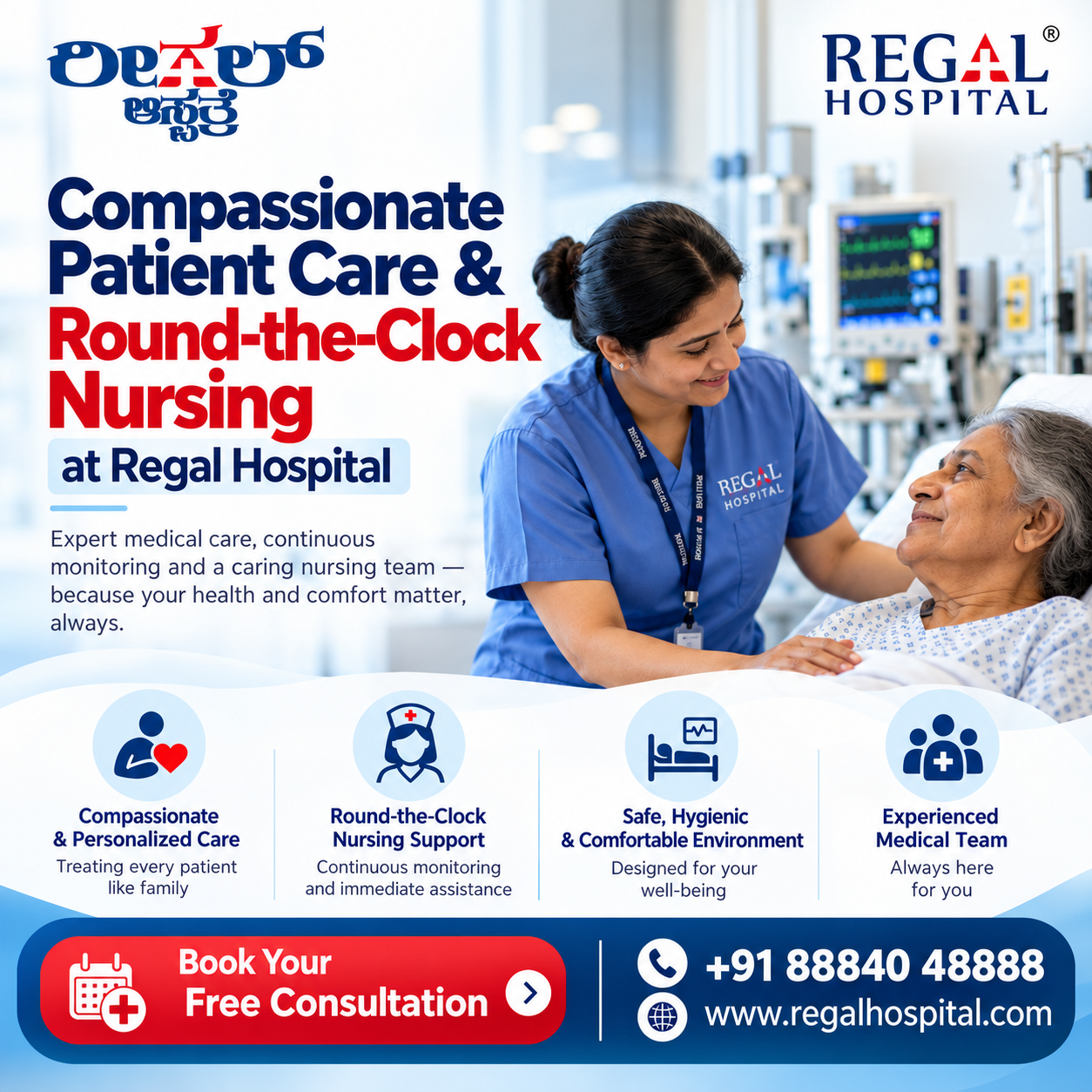
In hospitals, nursing staff play a pivotal role in the care team, and work in conjunction with other staff, including doctors and allied health professionals, to provide care, support and help restore patient’s health.
Nurses at Regal Hospital are required to provide professional and compassionate nursing care, and support the treating team in the management of patients’ healthcare needs around the clock.
The caring, competent and compassionate staff at Regal Hospital monitor and evaluate the needs of patients and effectively communicate changes to the treating team to ensure timely professional help is provided to patients, including managing pain.
Nursing responsibilities include monitoring the safety and effectiveness of care, as well as ensuring the right dose of medication is administered. To do this, nurses are required to check the details of care to be provided, and administer the care in accordance with the directions of the treating team. Nurses should remain vigilant to recognize signs of adverse effects to care or medication. Patients and their caregivers should inform the treating team of any allergies to medication, existing health conditions and previous negative effects to medication.
They should not change prescribed doses without medical advice.
Help with routine activities
Recovery from an illness can include the need for assistance to carry out some daily activities such as getting up, taking a bath, having a meal, changing position and other activities.
Help that supports dignity and comfort of a patient is important, especially the elderly, patients who have undergone surgery and patients with long term illnesses.
Helpful Service for Recovery
The stay in a hospital provides a lot of uncertainty to a patient and his/her family. Caring and supporting a patient in an activity that he/she feels uncomfortable doing or not knowledgeable about provides the family a sense of security and a way of actively participating in the care of the patient.
Emotional help to patient and family
Explaining the medical procedures and giving the rationale for the actions being taken can help reassure the patient and the family that the hospital is concerned with the medical welfare of the patient. The family needs to understand the condition of the patient and the medical actions being taken on him/her and to support the medical team in caring for the patient in the way they feel is appropriate and in accordance with what is within the interest of the patient. This will make the family feel secure and involved in the care of the patient.
Effective coordination of activities in various departments of the hospital ensures that the relevant information is given and shared.
Support during planned procedures and recovery
Leading up to a procedure, healthcare staff provide instructions about preparation and fasting, and ensure the presence of any required tests or medications. During recovery, staff evaluates pain, vital signs, and mobility, among other indicators.
Staff members provide support to the treating doctor to instruct patients regarding discomfort or other concerns and when to report them.
Chronic conditions support
Long term conditions, for example renal disease or diabetes, may require frequent or repeated visits, tests, and treatments.
Care plans often involve different specialists. Regal Hospital offers multispecialty services including nephrology and dialysis. Regular communication with patients is key to understanding their condition, care plan and the necessity of follow up.
Critical and emergency care
Not all conditions and needs require scheduled appointments. Regal Hospital provides emergency services on a 24 hour basis and has intensive care facilities.
In an emergency, assessing and quickly stabilizing the patient is the first priority. Afterward, staff closely monitors the patient, and coordinates the work of the various specialists involved in the patient’s care. The type of support provided to the patient is based on his/her condition and the services required.
When deciding on the best hospital experience in Bangalore, patients should consider clinical services, accessibility, communication practices, facilities and how well the hospital addresses their specific needs.
Regal Hospital offers several practical considerations for patients in its care:
Multispecialty Services: Availability of multiple medical and surgical specialties within one hospital.
Nursing Support: Availability of professional nursing staff around the clock.
Emergency and Intensive Care: Availability of hospital based emergency services and ICU.
Diagnostic Support: Availability of in-house tests and investigations.
Accessibility: Conveniently located in North Bangalore, for patients staying in Thanisandra, Hennur, Yelahanka, Hebbal, Hegde Nagar and surrounding areas.
Family communication: Involving families in the communication process and treatment journey of the patient.
When selecting a hospital, patients should consider availability of a relevant specialist, required services, visiting hours and expected follow-up.
A positive hospital experience is a result of the combination of several factors, the most important being clinically appropriate care, interpersonal respectful interactions and clear communication.
Frequently Asked Questions
- Why is nursing care important in a hospital?
Nursing care supports patient monitoring, prescribed medication administration, personal assistance, communication with doctors, and recovery. Nurses also help patients understand care instructions and report changes in their condition.
- Does Regal Hospital provide round-the-clock nursing support?
Regal Hospital’s appointment information describes professional nursing support as available around the clock. Contact the hospital directly to confirm arrangements for your specific admission or treatment needs.
- What does patient-focused care mean at Regal Hospital?
Patient-focused care emphasises treating patients with dignity, explaining medical information clearly, considering individual needs, and coordinating care with the relevant healthcare professionals.
- Is Regal Hospital accessible to patients in North Bangalore?
Regal Hospital is located in Tirumanahalli, North Bangalore, and serves patients from nearby areas, including Thanisandra, Hennur, Yelahanka, and Hebbal.
- How can I book an appointment at Regal Hospital?
Patients can contact Regal Hospital by phone or use its online appointment page to request a consultation. The appropriate department and appointment timing depend on the patient’s needs and current availability.
Book Your Free Consultation Today
 Call us today: +91 888 405 8888.
 Visit us: Near Thanisandra-Yelahanka Road, Bengaluru
 Learn more: www.regalhospital.com
This blog is for educational purposes only and should not replace medical advice from a qualified doctor. Please consult a specialist for diagnosis and treatment.