First, a kidney diagnosis brings massive changes to your dining table. Suddenly, meals that used to bring immense joy become stressful. Usually, you receive a long list of forbidden foods. Consequently, you might wonder what is actually left to enjoy.
Especially in a vibrant city like Bangalore, adjusting feels overwhelming. Because food is a huge part of our culture, a strict diet feels isolating. However, we want you to take a deep breath today. Truly, eating for kidney health does not mean eating bland, joyless food forever. Instead, it simply means eating smarter to give your kidneys some rest.
Here at Regal Hospital, we believe food should be your medicine, not your anxiety. Whether you are managing early Chronic Kidney Disease (CKD) or undergoing dialysis, understanding food is empowering. Therefore, here is an easy, practical guide to navigating your new kidney-friendly lifestyle safely.
What is a “Kidney-Friendly” Diet?
To understand the diet, you must understand your kidneys. Basically, your kidneys are your body’s natural filters. Every day, they remove waste and keep minerals at safe levels in your blood.
When your kidneys are damaged, they struggle to filter certain minerals effectively. If these minerals build up heavily in your blood, they cause massive problems. For example, they cause severe swelling, heart issues, and dangerous bone weakness. Therefore, a kidney-friendly diet controls these exact minerals. Ultimately, it reduces the workload on your kidneys and protects your overall health completely.
The “Big Three” Minerals to Watch
When managing kidney health, your dietitian watches three main minerals closely. Specifically, these are Sodium, Potassium, and Phosphorus.
1. Sodium (Salt)
First, sodium acts exactly like a sponge in your body. Because it holds onto water, extra sodium causes fluid buildup rapidly. Consequently, this leads to high blood pressure, swollen ankles, and dangerous shortness of breath.
-
The Goal: Always reduce your salt intake. Therefore, completely avoid heavily processed foods, pickles, papads, canned soups, and restaurant takeaways.
2. Potassium
Next, potassium keeps your heart beating regularly and muscles working perfectly. However, if compromised kidneys cannot filter excess potassium, it builds up silently. As a result, it causes dangerous, highly irregular heartbeats.
-
The Goal: Always limit high-potassium foods strictly. For example, avoid bananas, tomatoes, potatoes, and tender coconut water entirely.
3. Phosphorus
Finally, healthy kidneys perfectly balance phosphorus and calcium for strong bones. When kidneys fail, high phosphorus pulls calcium directly out of your bones. Consequently, bones become incredibly weak and brittle. Also, it causes severe, agonizing skin itching.
-
The Goal: Always limit high-phosphorus foods carefully. Specifically, reduce dairy products like cheese, excessive milk, nuts, seeds, and dark colas.
What to Eat: Safe and Delicious Choices
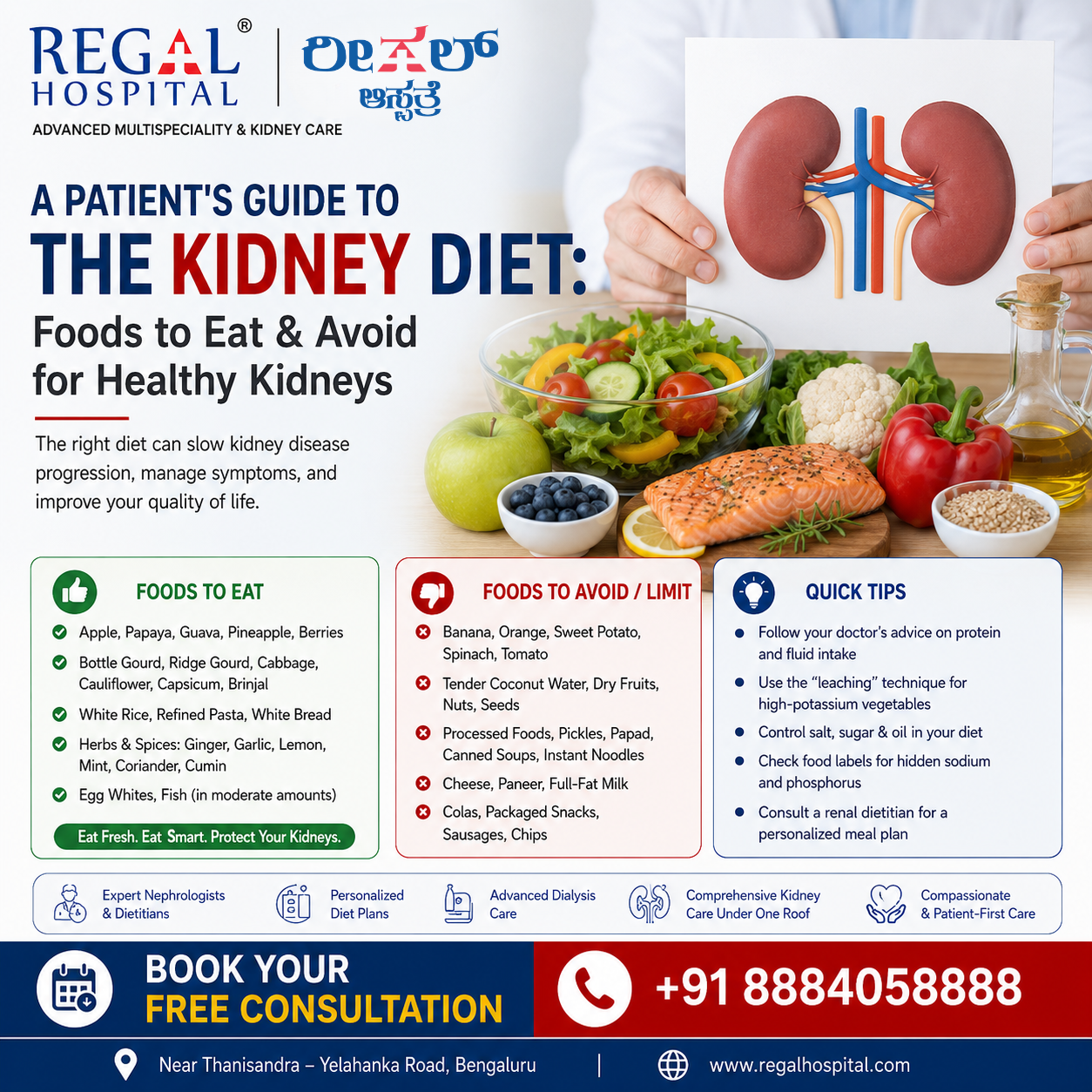
While it is easy to focus on forbidden foods, many delicious options remain! Here are excellent, highly kidney-friendly choices:
-
Low-Potassium Fruits: First, apples, papayas, guavas, pineapples, and fresh berries are wonderful, safe choices.
-
Kidney-Friendly Vegetables: Next, bottle gourd, ridge gourd, cabbage, cauliflower, and capsicum are very gentle on kidneys.
-
The Right Grains: Surprisingly, white rice and white bread are actually safer for kidney patients! Because brown rice is too high in phosphorus, stick to refined grains.
-
Flavor Boosters: Finally, use fresh ginger, garlic, green chilies, lemon juice, mint, and cumin heavily. These bring meals to life without adding dangerous salt.
What to Avoid or Limit
To strictly protect your kidneys, steer clear of these common items immediately:
-
Tender Coconut Water: Although deeply loved in Bangalore, it is dangerously high in potassium.
-
High-Potassium Veggies: Also, strictly avoid sweet potatoes, spinach, and large amounts of tomatoes.
-
Processed Snacks: Furthermore, completely avoid sausages, chips, salted biscuits, and instant noodles loaded with hidden sodium.
-
Dairy Heavy Meals: Finally, limit your heavy intake of paneer, cheese, and large milk glasses.
The Role of Protein and Water
-
Protein: First, your protein needs change depending exactly on your treatment stage. If you have early-stage disease, you must reduce protein heavily. However, if you are on dialysis, you actually need high-quality protein to replace losses.
-
Fluid Control: Next, if your kidneys make less urine, drinking water causes uncomfortable swelling. Therefore, your doctor will give you a strict daily fluid limit safely.
Practical Tips for Patients and Families
Adapting to a new diet is a journey for the whole family. Therefore, here are practical tips to make it much easier:
-
The Leaching Technique: First, if you really want potatoes, you must remove the potassium. Simply peel, cut, and soak them in warm water for two hours before boiling.
-
Manage Thirst Smartly: Next, if you are on a strict fluid limit, try sucking on a small ice cube safely.
-
Support, Don’t Police: Finally, family members should cook one kidney-friendly meal everyone can eat happily. Instead of isolating the patient, just add extra salt to your own plate later!
How Regal Hospital Can Help You
In conclusion, managing a specialized kidney diet requires expert, personalized guidance. Conveniently located near Thanisandra-Yelahanka Road, Regal Hospital is your trusted partner.
Specifically, our advanced Nephrology department is supported by experienced clinical dietitians. We take time to perfectly understand your lifestyle and specific blood tests. Whether you need early protection or use our dialysis unit, we are here to support your family fully.
📞 Call us today: +91 888 405 8888
📍 Visit us: Near Thanisandra-Yelahanka Road, Bengaluru
🌐 Learn more: www.regalhospital.com