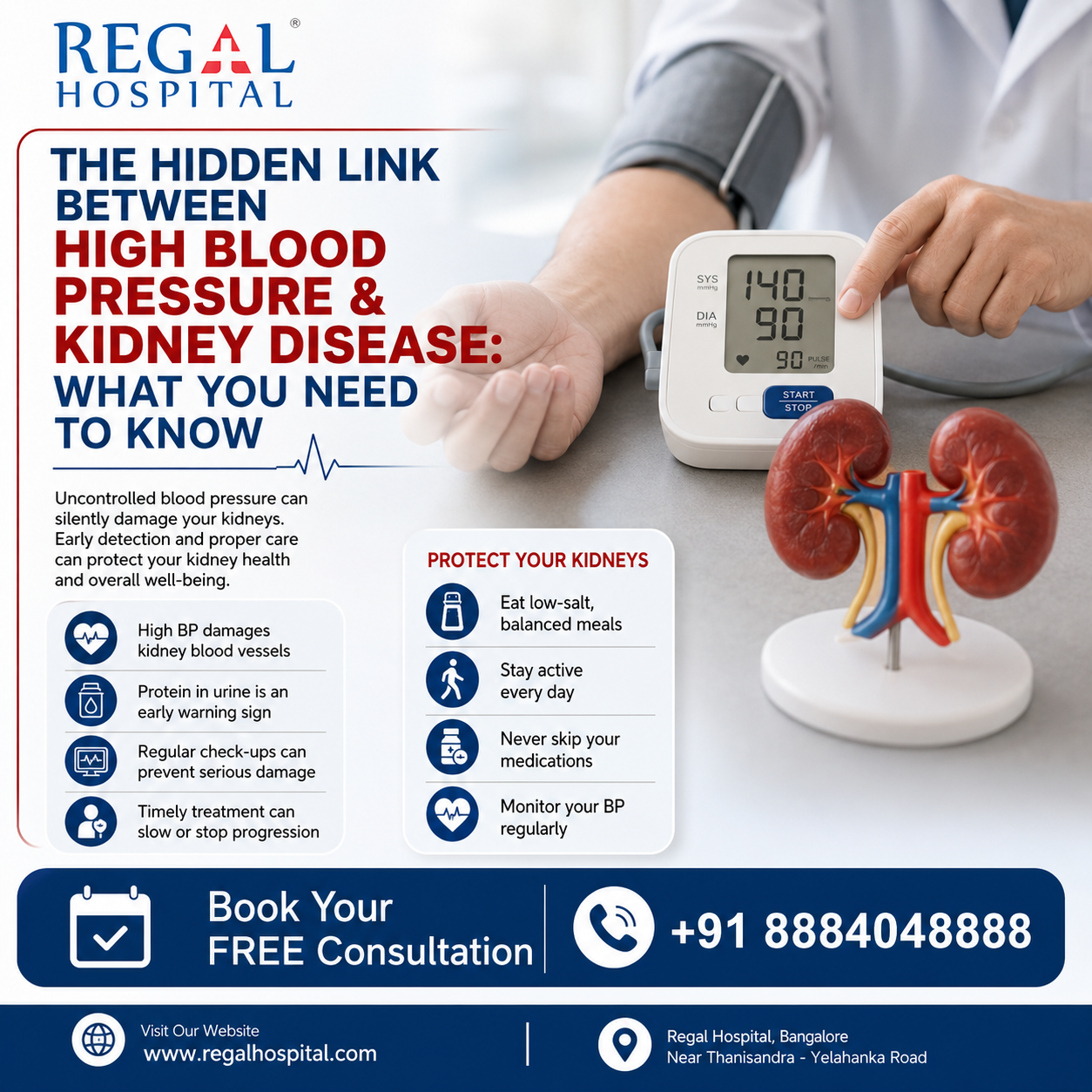
First, taking a daily blood pressure pill is just a normal routine. Like drinking tea or brushing our teeth, it is completely automatic. Usually, when a doctor wraps the cuff around our arm, we only worry about our heart. But, did you know uncontrolled high blood pressure is a leading cause of kidney failure in India?
Because hypertension rarely causes early headaches, it is easy to ignore. Unfortunately, while you might feel perfectly fine outside, your kidneys are silently struggling inside.
Here at Regal Hospital, we believe in treating the whole patient. Specifically, we want to help you understand the deep connection between your blood pressure and kidneys. Therefore, here is an easy guide on how this hidden link works and how to protect yourself.
Understanding the Connection: How Does Blood Pressure Affect the Kidneys?
First, to understand this connection, you must know how your kidneys function. Basically, your kidneys are your body’s master filtration system. Inside each kidney are millions of tiny, delicate blood vessels. Specifically, these tiny vessels filter waste and extra water from your blood to make urine.
When your blood pressure is high, blood flows with intense, aggressive pressure. Over time, this high pressure acts exactly like a rushing river against a fragile dam. Consequently, it severely stretches and weakens the delicate vessels inside your kidneys.
Once damaged, these tiny filters cannot remove waste effectively. Here is where the cycle gets incredibly tricky. Normally, healthy kidneys actually help regulate your blood pressure safely. When damaged, they lose this vital ability entirely. As a result, your blood pressure rises even further, creating a vicious cycle.
The Silent Warning Signs: Symptoms You Should Not Ignore
Undoubtedly, kidney damage caused by high pressure happens very slowly. In fact, hypertension is called a “silent killer” because it sounds no early alarms. However, as the condition worsens, you might notice:
-
Frequent Nighttime Urination: First, waking up multiple times to use the washroom.
-
Swelling (Edema): Next, damaged kidneys cannot remove extra fluid easily. Consequently, water pools in your body, causing puffy feet, ankles, or a swollen face.
-
Unexplained Fatigue: Also, a constant feeling of tiredness and deep weakness.
-
Foamy Urine: Furthermore, excessively bubbly urine means proteins are leaking from your damaged filters.
-
Loss of Appetite: Finally, a buildup of toxins leaves you nauseous and makes food taste metallic.
How Do Doctors Check for Kidney Damage?
If you have high blood pressure, a good doctor will not wait for symptoms. At Regal Hospital, we use simple, painless tests to monitor your kidney health:
-
Urine Test: First, a simple urine sample detects leaked protein quickly. Crucially, finding protein is the absolute earliest sign of kidney stress.
-
Blood Test (eGFR): Next, we check your blood for a waste product called creatinine. By doing this, your doctor calculates your eGFR, revealing exactly how well your kidneys still work.
Treatment and Management: Breaking the Cycle
If your doctor discovers early kidney damage, please do not panic. With the right medical care, the disease can be significantly slowed or stopped completely.
-
Blood Pressure Medications: First, doctors prescribe specific medicines that do double duty. Specifically, they lower your blood pressure and directly protect the kidney filters from further damage.
-
Managing Other Health Conditions: Next, keeping diabetes or high cholesterol strictly under control is essential.
-
Advanced Nephrology Care: Finally, if damage is advanced, our specialized nephrologists will help. For instance, they create a personalized plan including special diets and medications to maintain your quality of life.
Practical Tips for Patients and Families
Ultimately, protecting your kidneys starts with small, daily choices at home. Therefore, follow these practical tips to support your health:
-
Watch the Hidden Salt: First, salt acts like a magnet for water, which instantly increases blood pressure. Therefore, limit hidden salts in pickles, papads, and packaged namkeens.
-
Keep a BP Log: Next, buy a reliable digital blood pressure monitor for your home. Check your BP twice a week and show the log to your doctor.
-
Never Skip Medicines: Also, even if you feel healthy, take your pills exactly as prescribed. Stopping suddenly causes dangerous, massive pressure spikes.
-
Stay Gently Active: Furthermore, a simple, brisk 30-minute walk works absolute wonders for your heart.
-
Avoid Self-Medicating: Finally, frequent use of painkillers causes sudden kidney damage. Always ask your doctor before taking new medicines.
Take Charge of Your Kidney Health Today
In conclusion, high blood pressure affects both the heart and the kidneys. Therefore, having a medical team that works together is vital. Conveniently located near Thanisandra-Yelahanka Road, Regal Hospital offers a truly multispecialty approach.
Specifically, our expert cardiologists and renowned nephrologists work side-by-side perfectly. Therefore, your entire vascular system is completely protected. From routine check-ups to advanced dialysis, we handle every stage of your health journey. Do not leave your kidney health to chance.
📞 Call us today: +91 888 405 8888
📍 Visit us: Near Thanisandra-Yelahanka Road, Bengaluru
🌐 Learn more: www.regalhospital.com