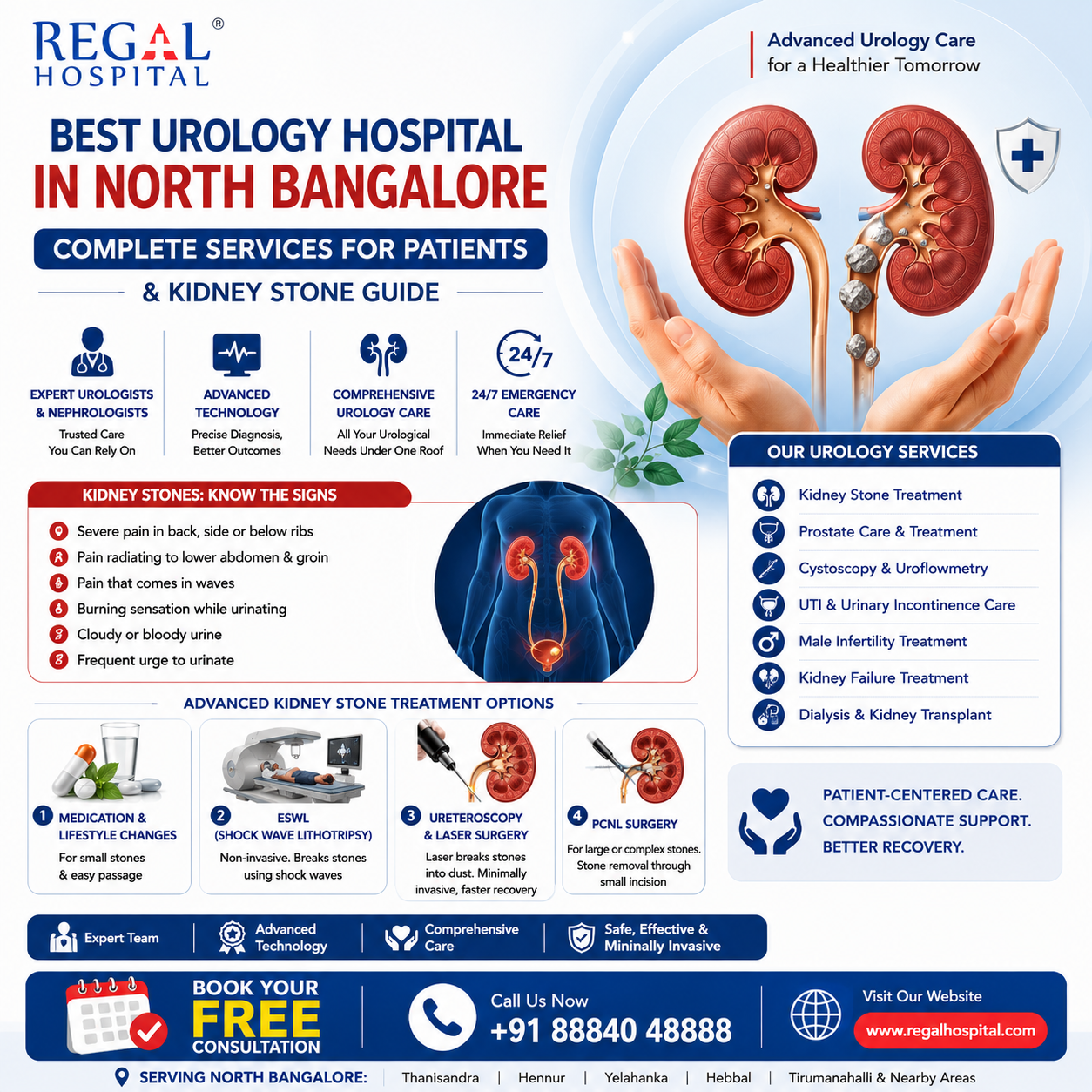
First, urological health directly affects our overall physical health. Specifically, from simple cystoscopy to complex urogenital surgery, expert care matters. If you are looking for top care, choose the best kidney stone hospital in bangalore today. Consequently, you will receive a seamless diagnosis and effective treatment.
Conveniently located near Thanisandra, we take your personal comfort seriously. Specifically, we provide a complete spectrum of advanced urological services. These range from kidney failure management to specialized prostate treatments.
Undoubtedly, the most common reason patients seek hospital care is kidney stones. Medically, these solid formations are known as renal calculi. If you are seeking treatment in Bangalore, understanding your options is vital. Therefore, recognizing early symptoms is the very first step toward relief.
What Are Kidney Stones?
Basically, kidney stones are solid formations that develop inside your urinary system. Normally, your kidneys filter your blood to remove excess fluid and waste. However, urine carries high concentrations of crystal waste sometimes. When there is insufficient fluid to dissolve these crystals, they bind together.
Interestingly, these stones range from sand grains to golf balls in size. While tiny stones pass through your system unnoticed, larger stones get stuck. Specifically, they lodge in the ureters connecting the kidneys to the bladder. Consequently, this causes severe urinary blockages and intense pain.
The Symptoms of Kidney Stones
Usually, stones resting silently in the kidney cause no noticeable symptoms. However, movement or obstruction triggers classic warning signs immediately. Therefore, common symptoms include:
-
Severe Flank Pain: First, sharp, acute pain in your back and side below the ribs.
-
Radiating Pain: Next, intense pain moving down into the lower abdomen and groin.
-
Fluctuating Waves: Also, intermittent pain that comes and goes in variable waves.
-
Burning Urination: Furthermore, painful urination with a sharp burning or stinging feeling.
-
Discolored Urine: Additionally, cloudy, foul-smelling urine that appears red, brown, or pink.
-
Urgent Need: Finally, a strong urge to urinate while passing only small amounts.
Causes and Possible Risks
Generally, knowing the root causes helps prevent painful kidney blockages effectively. Therefore, common potential risk factors include:
-
Dehydration: First, lack of adequate fluid intake is the leading cause.
-
Unhealthy Diet: Next, high consumption of sodium, refined sugars, and animal proteins.
-
Genetics: Also, a known family history of stones increases your risk.
-
Excess Weight: Furthermore, obesity and a high BMI increase stone risks.
-
Digestive Diseases: Finally, chronic diarrhea and GI illnesses disrupt mineral balance.
When Kidney Stone Pain Is an Emergency
While many stones are managed at home, some require emergency intervention. Therefore, seek immediate emergency advice or book an appointment if:
-
First, your pain is so severe that you cannot remain still.
-
Next, you experience chills and fever indicating a severe infection.
-
Also, severe vomiting prevents you from keeping any fluids down.
-
Furthermore, visible blood appears throughout your urine sample.
-
Finally, you experience an infection and an absolute inability to urinate.
How Are Kidney Stones Diagnosed?
At Regal Hospital, an accurate diagnosis is performed with speed and precision. Specifically, our diagnostic testing includes:
-
High-Resolution Imaging: First, ultrasounds and non-contrast CT scans locate stones instantly.
-
Blood Tests: Next, lab tests evaluate kidney function and high calcium levels.
-
Urine Tests: Finally, 24-hour urine collections analyze stone-forming minerals.
Kidney Stone Treatment Options in Bangalore
Currently, your exact treatment plan depends on stone size and location:
1. Drugs and Lifestyle Changes
First, small stones do not require any invasive procedures. Instead, your urologist advises drinking 2 to 3 liters of water daily. Also, we prescribe alpha-blockers to relax ureter muscles for easier passage.
2. Extracorporeal Shock Wave Lithotripsy (ESWL)
Next, ESWL is a non-invasive option for medium-sized stones. Specifically, sound waves focused from outside the body break stones into sand-like particles.
3. Ureteroscopy and Laser Surgery
Furthermore, laser surgery is the preferred method for large ureteral stones. Basically, a thin scope passes through the urethra directly to the stone. Then, a precise laser turns the stone into dust with rapid recovery.
4. PCNL Surgery
Finally, PCNL is used for especially large or numerous stones. Specifically, surgeons remove the stones through a tiny incision in your back.
Recovery and Prevention Tips
Ultimately, preventing future kidney stones is essential to protect your renal health:
-
Stay Hydrated Constantly: First, drink enough water so your urine remains pale daily.
-
Manage Your Sodium: Next, lower your salt intake to reduce calcium excretion.
-
Maintain Dietary Calcium: Also, natural dietary calcium binds oxalates safely in the gut.
-
Restrict Animal Proteins: Finally, reduce poultry and red meat to lower uric acid levels.
Why Choose Regal Hospital?
In conclusion, Regal Hospital is North Bangalore’s best-rated facility for comprehensive urology. Conveniently located near Thanisandra, Yelahanka, and Hebbal, we offer world-class care. Specifically, our multidisciplinary team of nephrologists and urologists provides complete renal support. Furthermore, our public digital outreach is developed by the best digital marketing agency to empower patients.
📞 Call us today: +91 888 405 8888
📍 Visit us: Near Thanisandra-Yelahanka Road, Bengaluru
🌐 Learn more: www.regalhospital.com