Introduction:
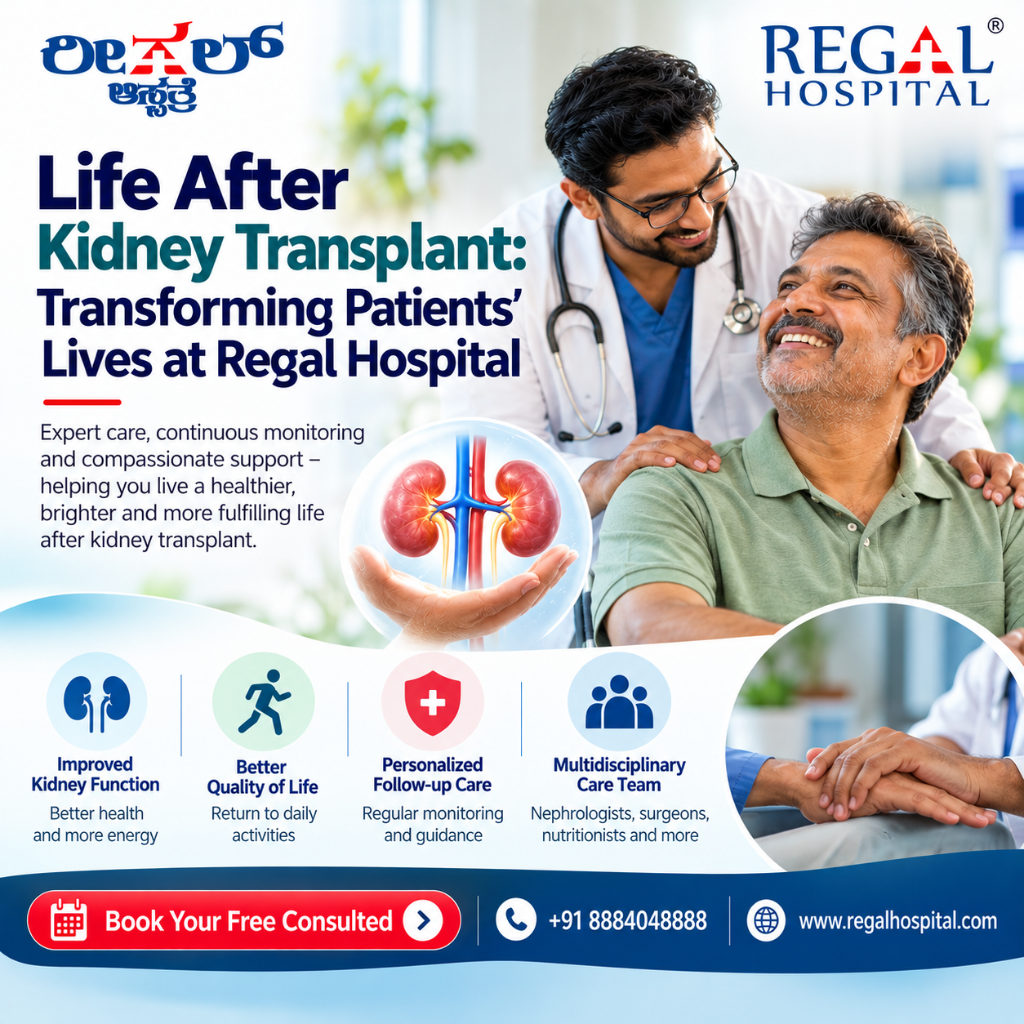
Getting a kidney transplant improves many aspects of a patient’s life including physical independence, improved comfort, and ability to engage in once valued activities. Though a transplant is a big operation and requires long term follow up and medication, it is worth it for the increase in patient’s quality of life.
For those considering a kidney transplant in Bangalore, the hospital choice is just as important as the post-surgery care. Recovery requires just as much effort as the actual surgery. This includes taking medications, dietary and lifestyle changes, and routine check-ups.
Regal Hospital is a full-service hospital in North Bangalore offering kidney care, nephrology, urology and dialysis services. The hospital staff is equipped to handle patient’s needs from initial consultation to post treatment care.
What Happens After Kidney Transplant?
In the case of end stage kidney disease, the options for treating kidney failure are dialysis and kidney transplantation. Dialysis has severe constraints on patient’s freedom and independence. Transplantation can give a patient a second chance at a normal life.
There are many factors that improve for a patient post transplant including their overall well-being, appetite, and energy. Improvement in a transplanted kidney’s function also means improvement in other organs that were previously not functioning properly due to build up of waste.
Transplant candidates are evaluated to ensure they can fully participate in transplant-related activities and provide self-care after surgery. These improvements are not immediate or identical for everyone. Recovery takes time, and the transplant team will tell you when it is safe to resume exercise, work and other normal activities.
Emotional well-being and family support
Living with kidney disease can affect emotional wellness, interpersonal relationships and planning for the day-to-day. A kidney transplant may alleviate some of these concerns; however, patients may feel anxious regarding their post-transplant health, rejection, and strict medicinal compliance. Family members, caregivers and health care team members are essential for the adjustment process. Contact your transplant health care team if you have concerns or questions.
Life after Kidney Transplant: Essential Care Tips
- Take your medicines as prescribed
Patients will need to take immunosuppressant medications for the rest of their lives. These medicines can be toxic to the body, increase the risk of infections, and cause other adverse effects. Your health care team will perform routine tests to monitor your health post-transplant. Do not stop taking your medications or alter the dose without your doctor’s consent. The transplant team will perform routine check-ups and blood tests. Notify your doctor about the new medicines you take including supplements and herbal products. Your transplant team can provide you with an emergency contact number if you cannot keep your medicines down.
- Follow a kidney friendly, balanced diet
Dietary needs may change after kidney transplant. Your doctor and dietitian can prescribe the right quantities of protein, salt, and potassium.
Consuming well-prepared, fresh foods and practicing proper food hygiene are essential. So is drinking the recommended fluids by your treating team. Avoid unpasteurized foods and others advised against by your healthcare professional.
Don’t expect that every dietary restriction during your dialysis will be immediately removed.
- Get back to physical activities gradually
Once your doctor gives the okay, you can start taking short, gradual walks to aid your recovery. Be sure to increase your activities and follow your doctor’s instructions concerning other restrictions and strenuous activities.
Recovering adequately, and getting enough rest and a consistent sleep schedule can be as beneficial to your recovery as the other activities your doctor prescribes.
- Go for follow-up visits
The visits enable your medical team to evaluate whether your kidneys are improving, the levels of your blood sugar, blood pressure, medications and signs of infections and rejection.
Not all problems will have symptoms; therefore, the tests will tell you whether all is well with your body.
After a transplant, here are the warning signs to look for and which require you to see your doctors immediately:
– Fever
– Chills
– Pain in your kidney transplant area
– Decreased urine output
– Sudden weight gain
– Unusual fatigue
– Swelling
If you have any of the above and feel extremely unwell, you should not wait to see your doctor during your next scheduled visit.
How Kidney Transplant Care Can Transform Your Life
For many, undergoing a successful kidney transplant means they no longer have to rely on dialysis. This can improve overall quality of life, as it gives more freedom with meal times and travel. A successful transplant can also allow a return to work and more active social schedules.
While a transplant provides many benefits, there are still risks. A transplanted kidney can still develop problems, and complications can still arise which may necessitate further treatment or even transplants.
Patients considering Bangalore kidney transplant services should manage their expectations. This is especially important when seeking information on risks, benefits, and alternatives to a kidney transplant. Patients should understand long-term consequences that may arise from a kidney transplant.
Why Choose Regal Hospital for Kidney Transplantation in Bangalore?
Regal Hospital offers a variety of services, from kidney diagnostics to treatment and care. Patients in North Bangalore especially benefit from the proximity of a multispecialty hospital.
Patients from Thanisandra, Hennur, Yelahanka, Hebbal and Tirumanahalli can contact us for more information.
When considering kidney transplantation in Thanisandra, a patient should ask about the transplant surgeon’s experience with kidney transplant assessments, donor evaluations, surgical procedures and post-transplant follow-up. It is also prudent to determine what support is available at the transplant hospital for complications that may occur post-transplant.
Nephelology and urology are the two primary specialties required for a successful kidney transplant. It is also a good idea to confirm what supporting services are available at the transplant hospital for follow-up care.
Understanding Patient Success Stories
Each patient’s experience with health recovery is unique. A success story that the families and patients at Regal Hospital can learn from, should cover the procedure as well as the follow up care, adherence to medication and lifestyle changes relating to long-term kidney health.
Patients interested in learning more about transplantation can enquire about the hospital team for patient stories that have consented to share their experiences. Individual experiences should not be viewed as predicting another patient’s outcome.
Preparing for a Kidney Transplant Evaluation
To determine if a patient is eligible for a kidney transplant, a thorough evaluation is needed. This would include various medical tests and assessments. Other factors that would be considered include the patients existing medical conditions and medications, as well as the health and support at home of the potential transplant recipient and donor.
If you are considering kidney transplant in Bangalore, you can schedule an appointment to bring your previous health reports and dialysis records, your current medications and other medical conditions. It would be helpful to learn more about the expected recovery, follow up, medications, possible complications, and when to seek medical attention.
Frequently Asked Questions
- Can kidney stones pass naturally?
Yes. Some small stones pass naturally, depending on their size and location. A doctor should assess whether observation is safe and whether follow-up imaging is needed.
- What is the best treatment for kidney stones?
There is no single best treatment for everyone. Medicines, observation, ESWL, ureteroscopy with laser treatment, or PCNL may be recommended depending on the stone and the patient’s health.
- Is laser surgery necessary for every kidney stone?
No. Laser treatment is used for selected stones during endoscopic procedures. Many small stones can be managed without surgery, while other stones may require a different procedure.
- How can I prevent kidney stones from returning?
Adequate hydration, reduced salt intake, personalised dietary guidance, and follow-up testing can help lower recurrence risk. Prevention should be tailored to the type of stone and the patient’s medical history.
- When should I consult a urologist for kidney stones?
Consult a urologist for recurring urinary pain, suspected stones, blood in the urine, or persistent urinary symptoms. Severe pain, fever, vomiting, or inability to pass urine requires urgent medical assessment.
Book Your Free Consultation Today
 Call us today: +91 888 405 8888.
 Visit us: Near Thanisandra-Yelahanka Road, Bengaluru
 Learn more: www.regalhospital.com
This blog is for educational purposes only and should not replace medical advice from a qualified doctor. Please consult a specialist for diagnosis and treatment.