Introduction:
Brain strokes are medical emergencies that require immediate treatment. Symptoms may include face drooping, arm weakness, speech difficulties, and loss of balance and/or vision. Recognizing these symptoms and acting quickly can help minimize stroke effects and complications.
When a stroke occurs, every second counts, and the first few minutes can make a huge difference for the patient. When a family is looking for stroke emergency care in Bangalore, this information is invaluable. The best hospitals always recommend that the patient be brought for emergency treatment as soon as possible. Delaying treatment may negatively impact the patient’s outlook.
At Regal Hospital, Tirumanahalli, North Bangalore, the emergency and trauma care facilities are functional 24/7, and are supported by critical care, diagnostic and other medical facilities. Patients and families living in Thanisandra, Hennur, Yelahanka, Hebbal and nearby areas can contact the emergency care team for help.
The guide provides important information on the FAST sign of stroke, what to do in case of suspected stroke, how doctors diagnose stroke and the rationale for the need for prompt hospital assessment.
A Haemorrhagic stroke occurs when a blood vessel ruptures and bleeds in/ around the brain. This may happen due to high blood pressure and congenital (inherited) abnormalities of the blood vessels.
An episode of what is known as a “mini stroke” is called a TIA (transient ischaemic attack). In a TIA, there is a temporary blockage of a blood vessel supplying the brain. TIA’s can occur without any apparent symptoms and it can predispose an individual to having a complete blockage of a blood vessel in the brain, which can result in a stroke.
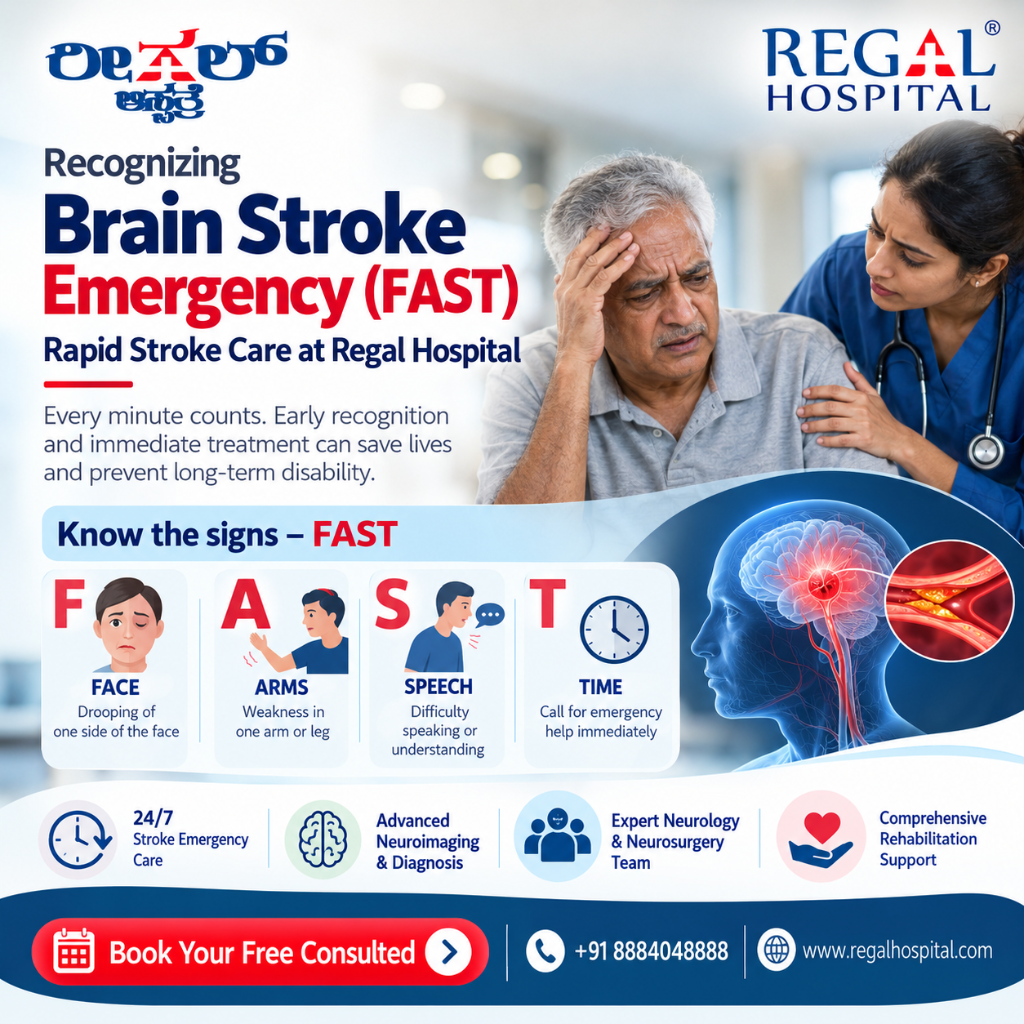
There are some simple rules to help recognize strokes.
Face
If a person is able to do so safely, ask them to smile. A person may not be able to smile with one side of the face. It may also droop.
Arm
A person may not be able to hold up one of their arms.
Speech
A person may have trouble understanding things.
Time
Call for emergency medical services (EMS) if you observe any of the signs mentioned above.
Other stroke symptoms include a sudden loss of vision, difficulty walking, dizziness, loss of balance, confusion and a severe headache.
The presence of one or more of these stroke symptoms is an emergency, and the stroke warning tool (FAST) should be used to assess the situation. FAST can help to identify stroke symptoms, however, it will not identify all strokes.
What Should You Do in a Suspected Stroke?
If you know what to do, you can ensure the person receives timely care and is safe until emergency services arrive.
-Call for emergency services right away. Don’t try to manage the situation yourself or wait for a scheduled appointment.
-Write down the time. This can be the time symptoms started or the time you last saw the person without symptoms.
-Help the person rest in a safe position. Follow the emergency operator’s instructions.
-Don’t let the person eat or drink. A stroke can weaken a person’s swallowing ability and increase the chance of choking.
-Don’t give the person aspirin. Aspirin can be harmful if a person is experiencing a stroke involving bleeding.
Give the emergency responders the information they need. If you have the information readily available, tell the emergency responders the person’s medical conditions, medicines, and allergies without delaying their care.
Don’t let the person drive to the hospital. Take the emergency responders’ advice about care and transport to the best emergency facility.
Why Is Time Critical for Stroke Emergency Care?
Because of many factors including the stroke type, when symptoms started, and other conditions of the person, the care provided will vary.
Certain patients with ischemic strokes can benefit from treatments with clot-busting drugs, but only within a strict time window. Beneficial effects of thrombectomy, the removal of a blood clot occluding a blood vessel, is also limited to a subset of patients. Not all imaging is created equal. Brain imaging and neurological assessment may help determine if a patient is a good candidate for thrombectomy.
There are no specific treatments for intracranial hemorrhages. Management is largely supportive and may include control of blood pressure and blood clotting, review of anticoagulation, and a consultation with neurosurgery to evaluate if a surgical craniotomy is warranted.
Asking “Stroke emergency care Bangalore” will NOT speed up first aid. If you suspect someone is having a stroke, call emergency services, and then take that person to the nearest emergency care facility.
Once in the emergency care facility, the focus is on quickly assessing and addressing the symptomatology to ascertain the type of stroke a patient has had, and to identify any associated complications.
Stroke type may be determined through neurological assessment.
Investigations to determine stroke type and complications may include brain imaging, laboratory testing and/or cardiac/vascular/neurological assessment. Not all tests are warranted based on the symptoms and the clinical situation.
Treatment and Recovery from Stroke
Treatment depends on the type, the severity, and the patient’s overall health.
Emergency Medical Care and Critical Care
Acute stroke patients require close monitoring and aggressive management of medical conditions that might compromise the brain’s recovery. This can include control of blood pressure and blood sugar. Treatment can also include prevention of complications, as well as the provision of general supportive care. Some patients require management in the ICU and/or the performance of interventional procedures.
Rehabilitation after Stroke
Stroke patients require a comprehensive, individualized, and integrated stroke rehabilitation plan if they are to regain their lost functional ability. The plan should involve the services of a physiatrist, a physical therapist, an occupational therapist, a speech/language pathologist, as well as a swallowing therapist.
In Stroke patients, the degree of recovery differs among individuals. Some patients show considerable improvement, while others require long term rehabilitation to perform activities of daily living (ADLs). A prompt, thorough assessment of a patient’s condition following an acute stroke is vital for the institution of a stroke rehabilitation plan aimed at alleviating function limitations and improving independence of the patient.
Prevention of Future Stroke
While complete prevention of a Stroke is not always possible, reduction of risk factors reduces the risk of a future stroke.
Long term control of high blood pressure
Control of diabetes and hyperlipidemia
It is important that you do not smoke. If you need assistance to quit smoking, contact your health care provider for support.
It is important that you maintain a healthy weight and eat a balanced diet. You should exercise as recommended by your health care provider.
Take your prescribed medications.
It is important that you attend all of your follow-up appointments. This is especially true if you’ve had a TIA or stroke.
It is important that you do not stop or change your prescribed medications.
Regal Hospital provides round the clock emergency care.
Frequently Asked Questions
- What are the first warning signs of a brain stroke?
Common warning signs include sudden facial drooping, weakness or numbness in an arm, difficulty speaking, vision changes, dizziness or loss of balance. Use FAST to recognise key symptoms and seek emergency help immediately.
- What should I do if stroke symptoms disappear?
Seek urgent medical assessment even if symptoms resolve. Temporary stroke-like symptoms may indicate a transient ischaemic attack, which requires prompt evaluation.
- How quickly should a person with a suspected stroke reach hospital?
Immediately. Call 112 in India or your local ambulance service as soon as stroke symptoms appear. Do not wait for symptoms to improve or delay care for a routine appointment.
- Can a stroke be treated?
Yes. Treatment options depend on the stroke type, timing, severity and the patient’s condition. Some patients may qualify for clot-dissolving medication or clot-removal procedures, while others require treatment for bleeding and supportive care.
- Does Regal Hospital provide emergency care in North Bangalore?
Regal Hospital’s website lists 24/7 emergency and trauma care, ambulance services and critical care facilities. Contact the hospital to confirm the appropriate services for a suspected stroke. In an emergency, call 112 or your local ambulance service without delay.
Book Your Free Consultation Today
 Call us today: +91 888 405 8888.
 Visit us: Near Thanisandra-Yelahanka Road, Bengaluru
 Learn more: www.regalhospital.com
This blog is for educational purposes only and should not replace medical advice from a qualified doctor. Please consult a specialist for diagnosis and treatment.