Introduction:
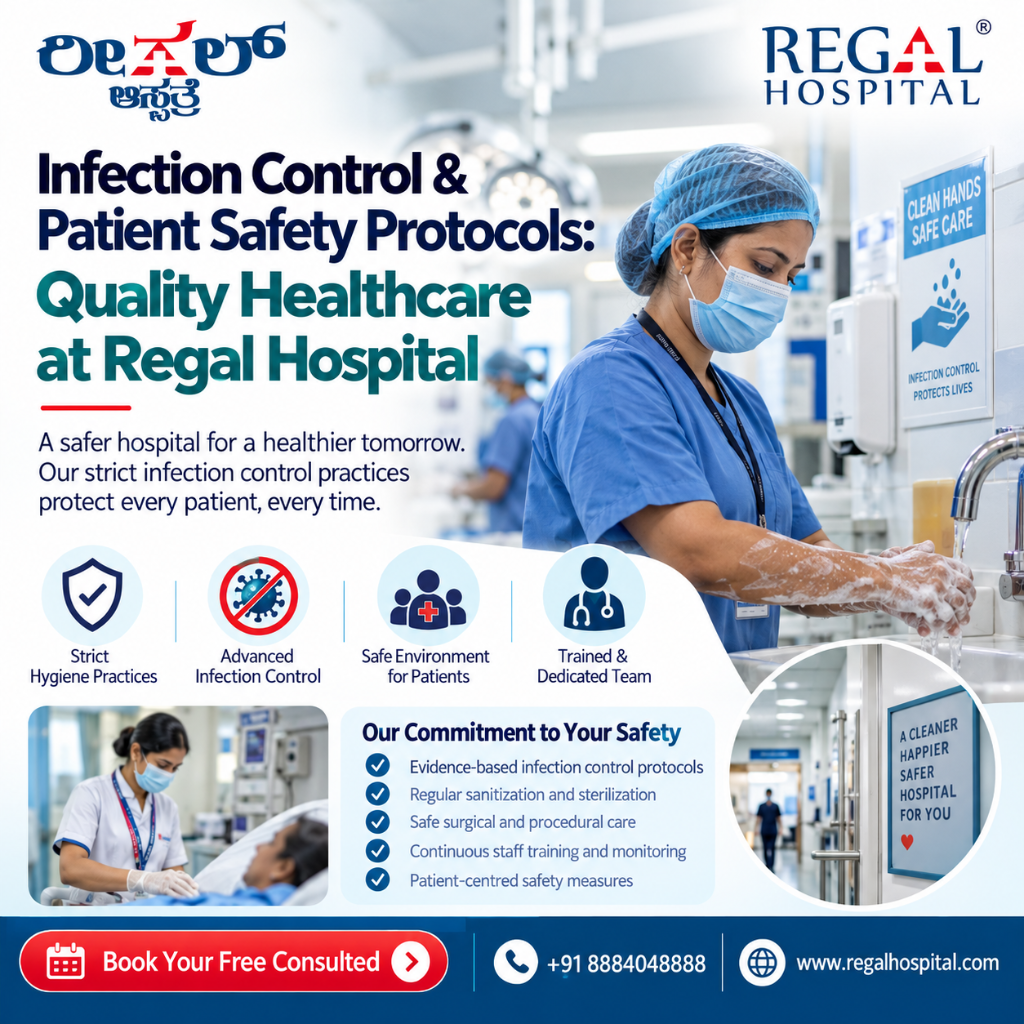
When choosing a hospital, patients and families want to know details about more than just the doctors and the treatments available. They want to know about the hospital’s procedures for cleanliness and infection control, patient protection during procedures, and the swiftness of the hospital’s response during a medical emergency.
People looking for a NABH hospital Thanisandra or a reliable hospital in North Bangalore need to consider infection control and prevention practices. These considerations are of utmost concern for patients going through invasive procedures like kidney stone removal and/or kidney dialysis.
Regal Hospital, a Bangalore based, advanced and multispecialty, kidney care and hospital, offers services in nephrology, urology, dialysis, kidney stone removal, and other related specialties. The location of the hospital in Tirumanahalli makes it accessible from Thanisandra, Hennur, Yelahanka, Hebbal and nearby areas.
Important: Patients looking for a NABH hospital Thanisandra should confirm the hospital’s current accreditation status with the hospital or the concerned accreditation body prior to making any healthcare decision.
Patients expect their safety will be protected at all times and in all ways when they receive medical treatment.
Infection Prevention is Only One Aspect of Patient Safety
There are many aspects of patient safety. Some examples are:
-Correct identification of patients prior to the administration of treatment and procedures.
-Proper and complete checks of all orders prior to administration.
-Staff should be properly trained to use all equipment in a safe and efficient manner.
-All equipment should be properly cleaned and disinfected prior to and after each use.
-Healthcare staff should communicate with one another in a clear and concise manner.
-Healthcare staff should monitor a patient’s condition and respond to any changes in the patient’s condition in a timely manner.
These safety practices are of particular importance during the surgical procedures and the treatment of patients that require constant monitoring.
Infection Control in Kidney Stone Treatment
Kidney stones are hard deposits of salts and minerals that form in the kidney when the urine is too concentrated. Some kidney stones are small enough to pass through the urethra while others may block the urethra and cause swelling and pain.
Common symptoms include:
-Pain in the side, groin, or abdomen
-Pain that moves to the testicles or scrotum
-Urine that is reddish brown
-Frequent urge to urinate
-Pain or burning when urinating
-Nausea
-Vomiting
Regal Hospital uses the latest and most advanced procedures and techniques for evaluation and treatment of kidney stones, and for other urological disorders, including medication-based treatment, extra corporeal shock-wave lithotripsy (ESWL) and Laser lithotripsy. For more complicated cases, we perform ureteroscopy with laser lithotripsy and retrograde intrarenal surgery (RIRS) and percutaneous nephrolythotripsy (PCNL).
Patients looking for information on treatment of kidney stones in Bangalore should take note of the CDC guidelines and other governmental agencies’ recommendations and protocols for infectious prevention during their treatment journey, especially when invasive procedures are necessary.
Importance of Infection Assessment
An infection is sometimes observed in obstruction and/or infection with kidney stone. Symptoms of fever, chills, and/or an infection with severe pain, vomiting, and/or urinary retention require immediate medical attention.
Prior to certain procedures, the evaluation of the patient’s urine and overall health helps the doctor determine whether there is an infection, and if so, whether more treatment is necessary.
The goal is to treat the infection and manage the patient overall.
Safe ICU Care at Regal Hospital
Due to their medical conditions, some patients require continuous care and observation.
Safe ICU protocols Regal Hospital patients may encounter can include continuous clinical monitoring, infection-prevention measures, appropriate use of medical equipment and coordinated care from critical-care professionals.
Regal Hospital offers Emergency and Critical Care Services. Its broader hospital infrastructure supports surgical, diagnostic and renal care services.
For patients requiring urgent evaluation and/or continuous care following a procedure, this type of coordinated support can be especially beneficial.
What to Expect During a Kidney Stone Evaluation
You may be directed to a urologist for a possible kidney stone diagnosis based on the symptoms you are exhibiting.
Depending on your symptoms and your medical history, your urologist may recommend a number of diagnostic tests.
Urine Tests
Urine tests may be ordered to check for blood, urinary tract infections (and other infections), and/or abnormalities.
Blood Tests
Blood tests may be ordered to help assess and/or evaluate kidney function and/or determine metabolic abnormalities.
ULTRASOUND AND OTHER IMAGING
Ultrasound can be used to detect kidney stones and obstruction in the urinary tract. Depending on the circumstances, a doctor may opt for a CT scan or any other suitable imaging test.
Regal Hospital’s information on kidney stones refers to the role of urine tests and various imaging studies in the evaluation of kidney stones.
An accurate diagnosis helps the urologist in deciding upon the appropriate mode of management, which could be watchful waiting, use of medication or a surgical / endoscopic intervention.
Treatment Options for Kidney Stones
Treatment of kidney stones in Bangalore depends on the size and location of the stone, the presence and type of obstruction, urinary tract infection and the general health of the patient.
Medicines and Observation
Smaller stones may pass out on their own. Pain relieving medicines and other medicines may be prescribed based on the situation.
It is advised that one does not take any medicines on his/her own. This is particularly true for patients with kidney, heart and other serious medical conditions, patients who are pregnant, and patients who take other regular medicines.
Lifestyle and Hydration
Staying hydrated helps in the prevention of formation of kidney stones and helps in passage of small kidney stones. This, however, may not be appropriate for patients with certain heart and kidney conditions. Hydration may also help in reduction of build up of salts in the body and in turn help in prevention of kidney stones. Following a low salt diet and adequate fluid intake may also be useful in the prevention of recurrent kidney stones.
ESWL
Extracorporeal shock wave lithotripsy (ESWL) is a procedure to break kidney stones with shock waves.
Regal Hospital provides information about extracorporeal shock wave lithotripsy (ESWL) as a kidney stone treatment option.
Ureteroscopy and Laser Surgery
Shock waves are passed through the skin to impact the stone and fragment it. The smaller fragments can then pass through the urinary tract.
This is one of the treatment options available to patients at Regal Hospital.
Surgery for Larger or Complex Stones
For larger stones, a more aggressive approach to stone removal may be indicated. A percutaneous nephrolithotomy (PCNL) is when a small incision in the back is used to access the kidney, and the stone is broken into smaller fragments or removed.
The treatment approach should always be individualized by an appropriate qualified urologist.
When Kidney Stone Symptoms Need Urgent Attention
Kidney stone pain is usually strong, but not all pain indicates an emergency. The following conditions are stone emergencies, and you should go to the nearest emergency room.
You should seek emergency treatment for symptoms including, but not limited to:
-Severe pain
-Fever and chills
-Persistent vomiting
-Blood in the urine
-Unable to pass urine
-Severe pain along with signs of a urinary tract infection
-Blockage of the urinary tract along with infection may lead to an emergency.
Knowing the above mentioned signs and symptoms of an emergency can be very helpful for patients to get prompt care in case of an emergency.
Recovery and Prevention After Kidney Stone Treatment
Not all patients are stone free after treatment, and future stones can occur. It is recommended patients consult with their doctor to help lower the chance of recurrence.
Maintain Appropriate Fluid Intake
Follow your doctor’s guidelines about daily fluid intake. Increased fluid intake may be recommended for some patients, while patients with kidney or heart issues may need fluid restriction.
Reduce Salt Consumption
A diet high in salt raises the risk of certain kidney stones and may need to be restricted.
Follow Customized Dietary Advice
Dietary changes for kidney stone prevention will vary based on the type of stone and the patient’s condition. Avoid restrictive, fad diets.
Keep Appointments
Imaging and other tests may be done to evaluate the stone and determine if treatment is working.
Why Choose Regal Hospital?
Regal Hospital’s multispecialty kidney care service offers urology, nephrology, dialysis, kidney stone care and emergency services.
ESWL, ureteroscopy, laser treatment and PCNL are some of the kidney stone management techniques done in our hospital.
We are located in Tirumanahalli and offer convenient location to families staying in North Bangalore (Hennur, Yelahanka, Hebbal, Thanisandra).
Kidney stone disease is prevalent in Bangalore and patients can consult a Urologist to know about their symptoms, diagnostics and treatment options before deciding on a treatment course.
Frequently Asked Questions
- What infection-control measures are important in a hospital?
Important measures can include hand hygiene, appropriate cleaning and disinfection, sterilisation of reusable instruments, safe equipment handling, appropriate protective equipment and monitoring for possible infections.
- Is kidney stone treatment safe?
Kidney stone treatment is selected according to the patient’s condition, stone size and location, urinary obstruction and other medical factors. Options can include observation, medicines, ESWL, ureteroscopy with laser treatment and surgery such as PCNL.
- When should kidney stone pain be treated as an emergency?
Secopy/laser, RIRS and PCNL, while its current homepage confirms urology, nephrology/dialysis and emergency critical-care services. vere pain accompanied by fever, chills, persistent vomiting, blood in the urine, inability to pass urine or symptoms of infection requires urgent medical evaluation.
- Can kidney stones cause a urinary infection?
Kidney stones can sometimes contribute to urinary obstruction, and an obstructed urinary system with infection can become serious. Fever, chills and urinary symptoms alongside significant stone pain should be assessed promptly.
- How can I find a good urology hospital in Bangalore?
Look for a hospital with qualified urology specialists, appropriate diagnostic facilities, suitable treatment options, emergency support and clear patient-safety practices. Patients should also verify current accreditation or certification claims directly with the hospital or relevant authority.
Read About Regal Hospital Infection Control Guidelines
Understanding infection prevention and patient-safety practices can help patients and families make informed healthcare decisions.
If you are comparing a NABH hospital Thanisandra or another healthcare facility in North Bangalore, consider asking about accreditation, infection-control practices, emergency support, specialist availability and the facilities relevant to your treatment.
For patients looking for kidney stone treatment in Bangalore, the same principle applies: choose care based on qualified medical evaluation, appropriate treatment options and patient-centred clinical support.
Book Your Free Consultation Today
 Call us today: +91 888 405 8888.
 Visit us: Near Thanisandra-Yelahanka Road, Bengaluru
 Learn more: www.regalhospital.com
This blog is for educational purposes only and should not replace medical advice from a qualified doctor. Please consult a specialist for diagnosis and treatment.