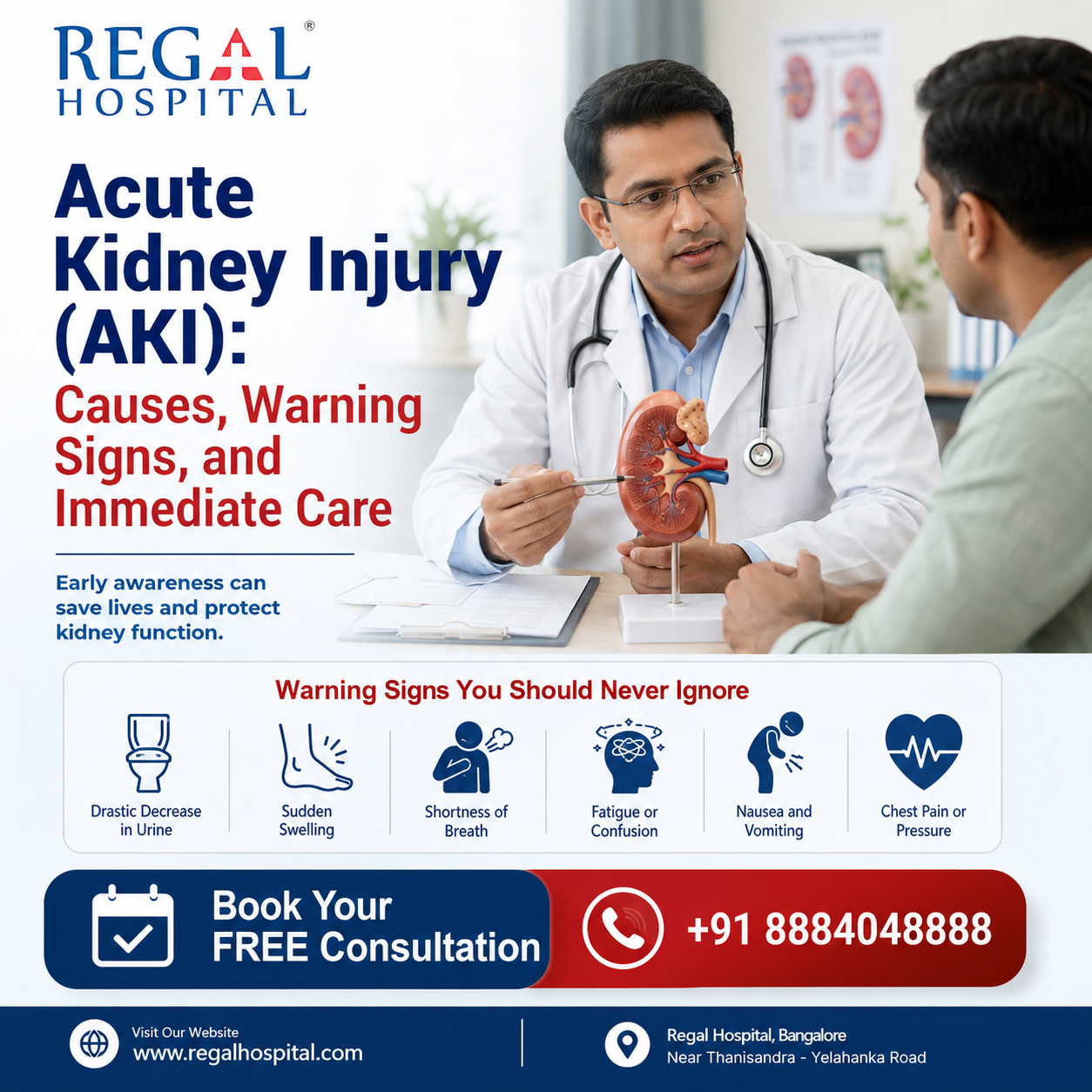
First, imagine you or an elderly relative are recovering from a severe stomach bug. You have been resting quietly. Suddenly, you notice a drastic drop in washroom visits. Also, you might feel unusually confused or incredibly tired. When our bodies behave strangely and suddenly, panic sets in fast.
If this sounds familiar, you might be seeing early warning signs. Specifically, these are signs of Acute Kidney Injury (AKI), also known as sudden kidney failure.
Naturally, the phrase “kidney failure” sounds incredibly scary. However, there is a very important piece of good news. Unlike long-term kidney diseases, AKI is often temporary. Furthermore, it is highly reversible if caught and treated quickly.
Here at Regal Hospital, our emergency nephrology team handles AKI cases regularly. Because education prevents panic, we encourage timely medical help. Therefore, here is a comforting, practical guide to understanding and treating AKI.
What is Acute Kidney Injury (AKI)?
Basically, your kidneys are your body’s ultimate filtration system. Every day, they constantly remove waste and balance fluids safely.
When a person has Chronic Kidney Disease (CKD), this ability fades slowly over years. However, Acute Kidney Injury is entirely different. Instead, it happens rapidly, often within a few hours or days. Suddenly, the kidneys stop filtering waste from the blood. Consequently, toxins and extra fluids build up very quickly.
Because it happens so fast, AKI is an absolute medical emergency. Therefore, it requires immediate hospital care. Fortunately, with prompt intervention, the kidneys usually heal and return to normal.
Why Does AKI Happen? 3 Main Causes
Usually, kidneys do not stop working suddenly without a major trigger. Therefore, medical experts group the causes into three simple categories:
1. A Sudden Drop in Blood Flow
First, your kidneys need a strong supply of blood. If your blood pressure drops severely, the kidneys are starved of oxygen. Consequently, they stop functioning. Common reasons include:
-
Dehydration: Often caused by extreme vomiting, diarrhea, or high fever.
-
Heavy Bleeding: Due to an accident or complex surgery.
-
Severe Infections: Such as sepsis, which drastically lowers blood pressure.
-
Heart Issues: For example, a sudden heart attack prevents blood from reaching the kidneys.
2. Direct Damage to the Kidneys
Next, the injury sometimes happens directly to the kidney tissue itself. This is triggered by:
-
Medications: Specifically, high doses of painkillers (NSAIDs), strong antibiotics, or blood pressure pills.
-
Toxins: Also, exposure to heavy metals or strong imaging dyes.
-
Allergic Reactions: Which cause severe internal inflammation quickly.
3. Blockages in the Urinary Tract
Finally, if urine cannot leave the body, it backs up completely. Consequently, it creates immense pressure that shuts the kidneys down. This is caused by:
-
Kidney Stones: Large stones blocking the draining tubes.
-
Enlarged Prostate: In men, this blocks the flow of urine totally.
-
Tumors or Clots: Any mass blocking the urinary tract safely.
Warning Signs: Symptoms You Should Never Ignore
Because AKI happens quickly, the symptoms appear suddenly and intensely. Therefore, if you experience any of the following, seek emergency care immediately:
-
Decreased Urine: First, you pass very little urine, or none at all, for a whole day.
-
Sudden Swelling: Next, rapid swelling in your legs, ankles, or around your eyes.
-
Shortness of Breath: Also, extra fluid builds up in your lungs, making breathing difficult.
-
Fatigue or Confusion: Furthermore, toxins affect the brain, causing severe drowsiness or disorientation.
-
Nausea and Vomiting: Additionally, feeling incredibly sick and unable to keep water down.
-
Chest Pain: Finally, chest pressure occurs if the heart lining becomes inflamed by toxins.
How is AKI Treated?
First, treatment for Acute Kidney Injury always requires hospitalization. The primary goal is to treat the exact cause quickly. Then, we give the kidneys time to rest and recover. Depending on the cause, your doctor uses:
-
IV Fluids: First, if AKI is caused by dehydration, IV fluids quickly restore blood flow.
-
Medications: Next, we use pills to safely control high blood potassium levels or treat infections.
-
Temporary Dialysis: Finally, we may use temporary dialysis to clean your blood. Importantly, this does not mean you need dialysis forever! Instead, it just helps until your kidneys heal fully.
Practical Tips for Patients and Families
Ultimately, preventing AKI is all about being highly proactive. Therefore, follow these tips when you are unwell:
-
Stay Hydrated: First, if you have severe diarrhea or fever, drink plenty of ORS water immediately.
-
Monitor the Elderly: Next, older adults are much more prone to AKI. Therefore, closely watch how often they use the washroom when sick.
-
Avoid Painkillers: Also, never pop pain pills routinely without a doctor’s advice. Because overuse silently damages kidneys, it makes them vulnerable to sudden failure.
-
Manage Chronic Illness: Finally, keep your blood sugar and pressure under strict control constantly.
Take Charge of Your Kidney Health Today
In conclusion, your kidneys work tirelessly to keep you healthy. Therefore, they deserve to be fully protected. If you are living with diabetes, do not leave your health to chance. Our compassionate team provides the expert care you completely need.
📞 Call us today: +91 888 405 8888
📍 Visit us: Near Thanisandra-Yelahanka Road, Bengaluru
🌐 Learn more: www.regalhospital.com