First, hearing a doctor say “kidney disease” is deeply scary. Suddenly, it feels like your world has stopped turning. Naturally, it is completely normal to feel anxious and overwhelmed. Specifically, you might wonder if you need dialysis immediately. Also, you might worry about how this affects your family.
However, please take a deep breath today. Truly, a diagnosis is not the end of the road. Instead, it is the beginning of a new, highly manageable journey. Because medical science has advanced beautifully, you have great options. With the right care and lifestyle changes, people with CKD live active lives. Here at Regal Hospital, our goal is to take the fear out of your diagnosis. Therefore, here is a simple, compassionate guide to understanding CKD.
What is Chronic Kidney Disease (CKD)?
Basically, your kidneys are your body’s master filters. Every day, they filter 200 liters of blood to remove toxins and extra water. Then, they turn this waste into urine. Furthermore, they help control your blood pressure and keep your bones strong.
Importantly, the word “chronic” means long-lasting. Specifically, Chronic Kidney Disease happens when the kidneys experience gradual damage over months or years. Consequently, they begin to lose their filtering ability. Unlike a sudden infection, CKD is a long-term condition. Therefore, the goal of treatment is not a quick cure. Instead, the goal is to protect your remaining kidney function and slow down the disease.
What Causes Chronic Kidney Disease?
Usually, kidneys do not fail on their own. Instead, they are often damaged by other health conditions. In India, the two most common culprits are:
-
Diabetes: First, high blood sugar acts like sandpaper on delicate blood vessels. Over time, this slowly destroys their ability to filter waste.
-
High Blood Pressure: Next, uncontrolled pressure puts immense strain on tiny kidney vessels. Consequently, these vessels narrow and weaken, reducing healthy blood flow.
Additionally, other causes include recurrent kidney infections and genetic conditions. Furthermore, prolonged use of certain painkillers heavily damages the kidneys.
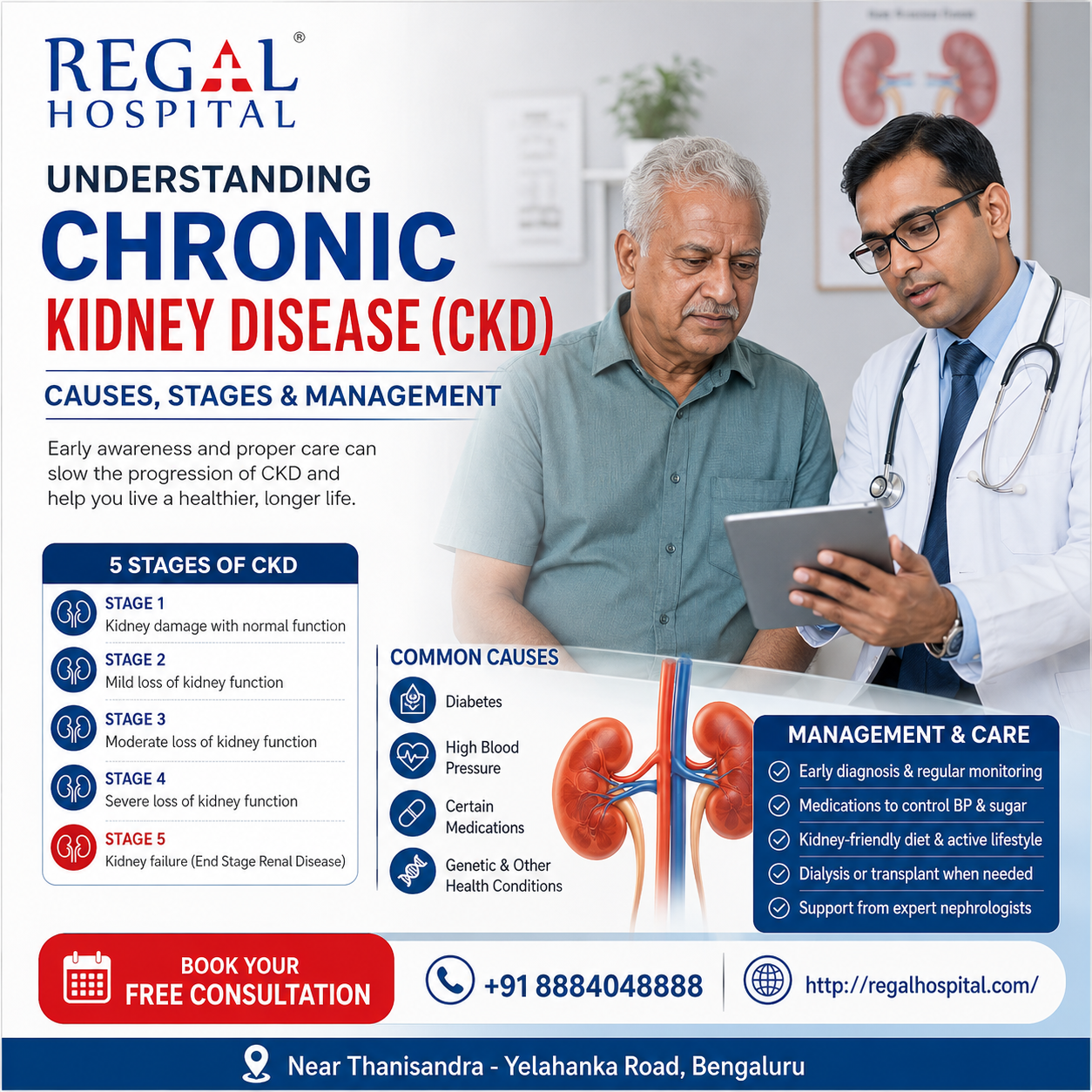
Understanding the 5 Stages of CKD
First, kidney specialists measure your health using an eGFR score. Simply put, think of it as your kidney function score. Based on this score, CKD is divided into five specific stages:
-
Stage 1 & 2 (Mild Damage): First, your kidneys are still filtering waste well. However, there are early signs of damage, like protein leaking into urine. Fortunately, with diet changes, you can stay in these stages for years.
-
Stage 3 (Moderate Damage): Next, waste begins to build up slightly in your blood. Consequently, you might notice mild fatigue or swelling. Here, your doctor will focus heavily on protecting your kidneys.
-
Stage 4 (Severe Damage): Also, your kidney function is now significantly reduced. Because symptoms become very noticeable, your team will discuss future options like dialysis.
-
Stage 5 (Kidney Failure): Finally, this is called End-Stage Renal Disease. At this point, the kidneys have lost almost all ability to function. Therefore, dialysis or a kidney transplant becomes absolutely necessary.
Recognizing the Symptoms
Interestingly, your kidneys are highly adaptable. Because they compensate for failing function early on, you might not feel sick during Stages 1 to 3. However, as the condition progresses, you may notice:
-
First, severe swelling in your ankles, feet, or around your eyes.
-
Next, feeling constantly tired or totally lacking energy.
-
Also, going to the bathroom more often at night, or foamy urine.
-
Furthermore, a persistent metallic taste in your mouth or a loss of appetite.
-
Additionally, dry, severely itchy skin.
-
Finally, shortness of breath due to fluid building up in your lungs.
Treatment and Management Options
While CKD cannot be completely reversed, we can drastically slow it down. Specifically, your exact treatment plan will depend on your stage:
-
Medications: First, your doctor will strictly control your blood pressure and sugar. Also, you may receive supplements for bone health.
-
Dietary Adjustments: Next, a specialized kidney diet is a powerful medicine. Specifically, you must reduce salt and monitor your protein intake daily.
-
Dialysis: Furthermore, if you reach Stage 5, dialysis is required. Basically, a machine acts as an artificial kidney to filter your blood safely.
-
Kidney Transplant: Finally, receiving a healthy kidney from a donor offers a return to a normal lifestyle.
Practical Tips for Patients and Families
Ultimately, managing CKD is a total team effort. Therefore, here is how you can support your health at home:
-
Take Medications on Time: First, never skip your blood pressure or sugar pills. Truly, they are your strongest shield.
-
Eat Home-Cooked Meals: Next, this is the easiest way to control hidden salts and fats.
-
Do Not Self-Medicate: Also, always ask your doctor before taking over-the-counter painkillers.
-
Stay Active: Furthermore, a gentle 30-minute walk daily keeps your heart healthy.
-
Lean on Caregivers: Finally, your emotional support matters immensely. Therefore, let your family help you on tough days.
How Regal Hospital Can Help You
In conclusion, living with CKD requires a trusted healthcare partner. Conveniently located near Thanisandra-Yelahanka Road, Regal Hospital is a premier multispecialty center. Specifically, we offer end-to-end kidney care completely under one roof.
From early diagnosis to state-of-the-art dialysis, we handle every stage of your journey. Furthermore, our experienced doctors and compassionate nurses treat every patient like family. Therefore, take charge of your kidney health today.
 Call us today: +91 888 405 8888
 Visit us: Near Thanisandra-Yelahanka Road, Bengaluru
 Learn more: www.regalhospital.com