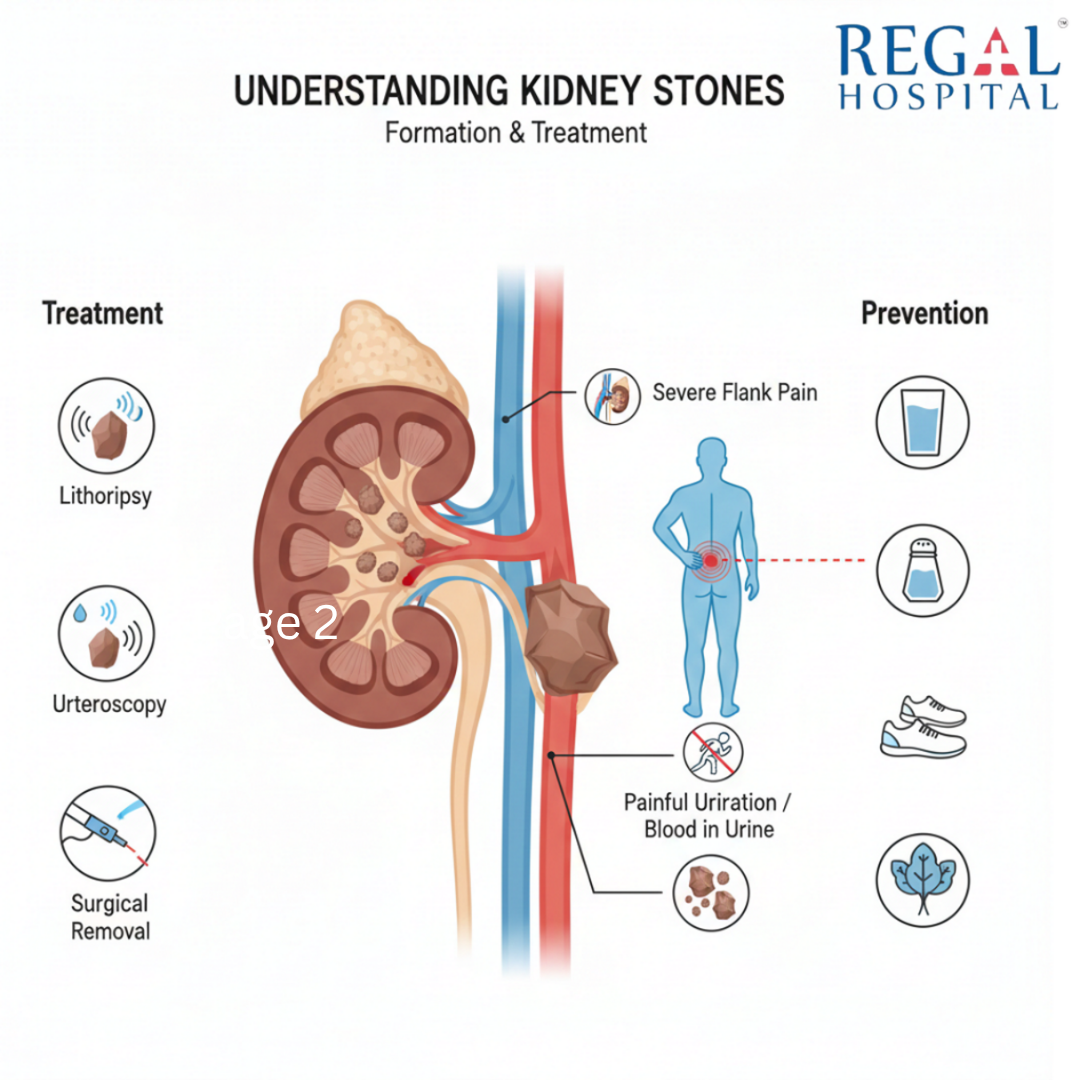
First, let us answer a very common question. Specifically, what are kidney stones? Basically, these are hard deposits made of minerals and salts. Naturally, they form inside your kidneys. If left untreated, they cause extreme discomfort. In fact, they range in size from tiny sand grains to large pearls. Usually, stones form when your urine is too concentrated. As a result, minerals crystallize and stick together over time.
What Are the Different Types of Stones?
Importantly, not all kidney stones are the same. Therefore, doctors classify them into four main types:
-
1. Calcium Stones: First, these are the most common type. Mostly, they are made of calcium oxalate.
-
2. Struvite Stones: Next, these stones form quickly after urinary tract infections.
-
3. Uric Acid Stones: Also, these form if you do not drink enough fluids. Furthermore, eating a high-protein diet causes them.
-
4. Cystine Stones: Finally, these are quite rare. Specifically, they happen in people with a genetic condition that leaks amino acids.
Symptoms of Kidney Stones
When a stone moves into the ureter, it hurts terribly. Therefore, watch for these warning signs:
-
First, severe pain in the back and side, just below the ribs.
-
Next, pain radiating to the lower stomach or groin.
-
Also, pain that comes in intense waves.
-
Furthermore, painful and difficult urination.
-
Additionally, pink, brown, or red urine (indicating blood).
-
Moreover, cloudy or bad-smelling urine.
-
Likewise, severe nausea and vomiting.
-
Lastly, fever and chills if you have a bad infection.
Causes and Risk Factors
Undoubtedly, certain habits increase your risk of stones. Therefore, be aware of these common factors:
-
To begin with, not drinking enough water (dehydration).
-
Also, eating a diet high in salt, animal protein, and sugar.
-
Furthermore, carrying excess body weight (obesity).
-
In addition, having stomach or bowel diseases.
-
Similarly, having previous surgeries like a gastric bypass.
-
Finally, having a family or personal history of kidney stones.
Expert Treatment and Prevention
Fortunately, treatment depends on the exact size of the stone. If a stone is small, it might pass naturally. Therefore, drinking lots of water and taking safe painkillers helps immensely. However, larger stones need advanced medical care. For example:
-
Lithotripsy: Specifically, doctors use sound waves to break the stone into tiny pieces.
-
Ureteroscopy: Also, a tiny lighted tube goes inside to grab or break the stone safely.
-
Surgery: Finally, doctors perform safe surgery to remove very large, complex stones.
Above all, prevention is absolutely vital! Therefore, follow these healthy guidelines:
-
Drink More Water: First, dilute your urine by drinking 8 to 10 glasses every day.
-
Cut Down Sodium: Next, eating too much salt raises the calcium levels in your urine.
-
Reduce Animal Protein: Also, eating too much red meat raises uric acid levels.
-
Watch Oxalates: Furthermore, avoid spinach, nuts, and chocolate if you get calcium stones.
-
Stay Active: Finally, try to maintain a healthy body weight.
Get the Help You Need Today
In conclusion, if you think you have kidney stones, do not wait. Instead, talk to our specialists at Regal Hospital Kidney Center today. Specifically, our experts provide precise diagnoses and powerful treatments. Together, we will build a tailored plan so you can live a life without pain.
 Visit https://regalhospital.com/ to book your appointment.
WhatsApp: https://wa.me/+918884048888